Recognize that ethical labor practices in agriculture start with ensuring every worker receives fair wages above provincial minimums, access to safe working conditions with proper equipment and training, and guaranteed breaks regardless of seasonal pressures. Your commitment to worker dignity strengthens the farm-to-table chain’s integrity and builds consumer trust that translates directly to market advantages.
Implement transparent hiring practices by documenting all employment terms in writing, providing workers’ compensation coverage, and creating clear pathways for temporary foreign workers to understand their rights under Canadian law. Alberta producers leading in ethical innovation have discovered that investing in worker wellbeing reduces turnover costs by 40-60% while increasing productivity during critical harvest periods.
Establish regular communication channels where farmworkers can voice concerns without fear of retaliation, schedule consistent work hours that respect family time, and provide adequate housing that meets or exceeds provincial standards for on-farm accommodations. These foundations aren’t just moral imperatives—they’re competitive advantages in a marketplace where consumers increasingly demand accountability from their food sources.
Build partnerships with organizations like the Alberta Federation of Labour and local settlement agencies to access training resources, compliance guidance, and support systems that make ethical practices sustainable for operations of any size. The innovations transforming Canadian agriculture aren’t only about technology or marketing—they’re about recognizing that your workforce represents your most valuable investment, and treating people with respect creates resilience that weather, markets, and economic pressures cannot erode.
The Real Cost of Farm-to-Table: Beyond the Soil
What Makes Labor Practices ‘Ethical’ on Canadian Farms
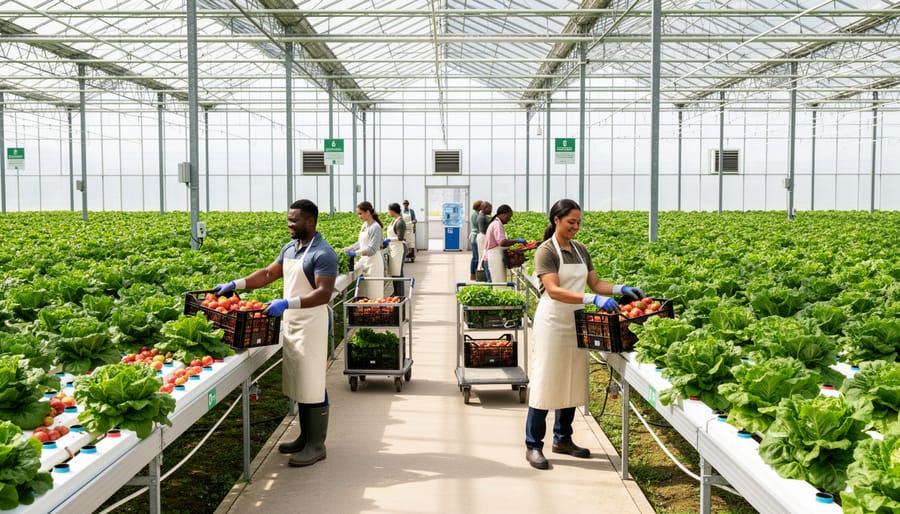
Ethical labor practices on Canadian farms rest on clear, measurable standards that protect workers while supporting viable agricultural operations. At the foundation, this means compliance with provincial employment standards—in Alberta, for instance, farm workers are entitled to minimum wage ($15 per hour as of 2023), though many ethical employers exceed this based on skill and experience.
Beyond wages, ethical standards encompass safe, dignified housing when accommodations are provided. This includes separate sleeping quarters, proper ventilation, clean water access, and functional cooking facilities. The Canadian Agricultural Human Resource Council recommends at least 4.6 square meters per person in shared sleeping areas.
Safety protocols are non-negotiable. Workers must receive training in their primary language, access to personal protective equipment, and clear emergency procedures. Regular equipment maintenance and hazard assessments protect everyone on the operation.
Worker rights form the ethical framework’s backbone. This includes written employment contracts detailing wages, hours, and job duties; freedom from passport retention or movement restrictions; access to healthcare; and the right to raise concerns without retaliation.
According to Sarah Thompson, an agricultural labor consultant based in Lethbridge, “Ethical practices also mean respecting cultural differences and providing adequate rest periods. We’ve seen farms that offer language classes and community integration support—these investments create loyal, productive teams.”
For temporary foreign workers, ethical employers ensure contract transparency, cover recruitment fees, and provide return transportation as legally required. These standards aren’t just moral imperatives—they’re increasingly becoming market differentiators as consumers demand accountability throughout the food supply chain.
The Hidden Labor Challenge in Alberta’s Agriculture Sector
Alberta’s agriculture sector faces a complex labor reality that deserves honest conversation. With over 40,500 farms across the province, producers increasingly rely on seasonal workers to meet harvest demands and manage livestock operations during peak periods. These workers, many arriving through the Seasonal Agricultural Worker Program, fill critical gaps that local hiring alone cannot address.
The challenge isn’t simply about finding workers. It’s about the mismatch between labor availability and the intense, time-sensitive nature of agricultural work. Spring seeding and fall harvest create concentrated demand periods where farms need reliable teams working extended hours. Meanwhile, housing seasonal workers in rural areas, navigating program requirements, and ensuring consistent communication across language barriers adds layers of complexity many producers weren’t trained to handle.
Recent surveys from the Canadian Agricultural Human Resources Council show 55% of Alberta farmers report ongoing labor shortages. However, this situation also presents opportunity. Farms that invest in proper worker accommodations, clear communication protocols, and respectful workplace cultures report better retention and productivity. The gap between current practices and ethical standards isn’t insurmountable. It simply requires intentional planning, modest infrastructure investments, and commitment to viewing workers as valued team members rather than temporary solutions.
Farm-to-Table Innovations That Put People First
Year-Round Employment Models That Work
The transition from seasonal to stable employment is reshaping how Canadian farms approach workforce management. Several Alberta operations have successfully implemented year-round employment models by diversifying their operations beyond traditional growing seasons.
One proven approach involves combining field production with greenhouse operations. A mixed vegetable farm near Red Deer extended employment from four months to ten by adding 200 square metres of heated greenhouse space. During winter months, employees transition from outdoor harvesting to greenhouse production and equipment maintenance, ensuring consistent income throughout the year.
Value-added processing offers another pathway to stable employment. A grain farm in central Alberta installed on-site milling and packaging facilities, creating year-round positions in processing, quality control, and direct marketing. This diversification increased employee retention by 75 percent over three years while opening new revenue streams.
Crop diversification also supports extended employment. Farms incorporating both early-season crops like peas and late-harvest crops such as winter squash naturally extend their labor needs. Adding livestock or aquaponics systems creates ongoing care responsibilities that sustain employment during traditional off-seasons.
The investment in infrastructure and planning required for these transitions pays dividends through reduced recruitment costs, improved worker expertise, and stronger community relationships. Starting small with one diversification strategy allows farms to test viability before expanding their year-round operations.
Technology That Reduces Physical Strain (Not Jobs)
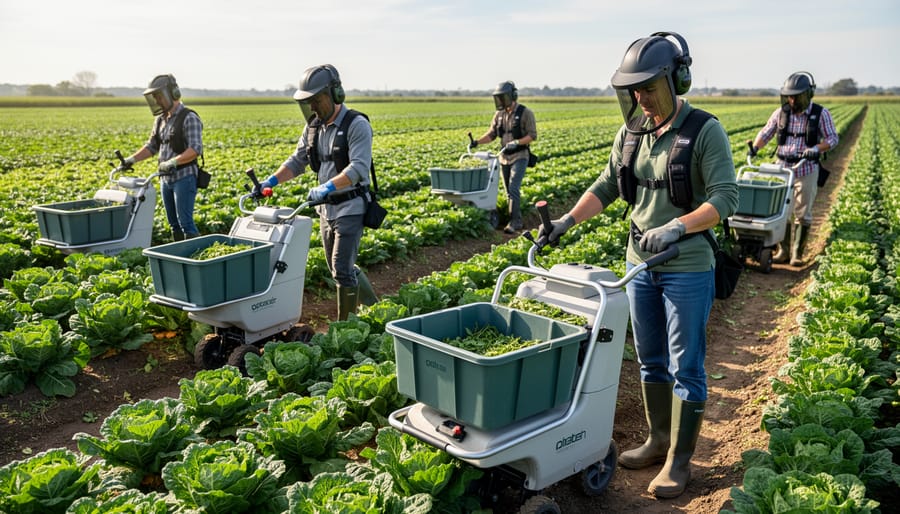
Modern technology can reduce physical demands on workers without replacing them entirely. The goal is supporting human labour, not eliminating it.
Harvest assists are wheeled platforms that allow workers to sit while picking crops at ground level, reducing knee strain and back injuries common in traditional hand-harvesting. Alberta berry farms report workers can maintain productivity for longer periods when using these assists, reducing fatigue-related errors and improving worker retention throughout the season.
Ergonomic hand tools make a significant difference. Pruning shears with rotating handles reduce repetitive strain injuries, while lightweight harvesting containers with padded straps distribute weight evenly across shoulders. These tools typically cost between $30-150 per worker but decrease injury rates substantially.
Mechanized lifting equipment, like pallet jacks and small forklifts, prevents back injuries when moving harvest bins or supply pallets. Many Alberta vegetable operations now use battery-powered pallet movers that workers can operate with minimal training, eliminating the need to manually push 200-kilogram loads across fields.
The Saskatchewan Canola Development Commission found that farms investing in worker-assist technology saw 40 percent fewer workplace injury claims while maintaining the same workforce size. These technologies extend workers’ careers by reducing cumulative physical strain, creating more experienced, stable farm teams. The key is choosing equipment that complements human skill rather than replacing the judgment and care that experienced agricultural workers provide.

Worker Housing and Transportation Solutions
Quality housing and reliable transportation remain fundamental to worker well-being, yet many farms struggle with these logistics. Progressive Alberta operations are finding creative solutions through collaborative approaches.
Cooperative housing models are gaining traction across Canadian farms. Some producers have partnered with local housing cooperatives to develop shared seasonal worker accommodations, splitting construction and maintenance costs while ensuring quality standards. These facilities typically include private sleeping quarters, shared kitchen facilities, and recreational spaces, creating environments that respect worker dignity and privacy.
Transportation presents unique challenges in rural areas. Several Alberta farms have established carpooling systems coordinated through community partnerships, connecting workers with nearby services and amenities. One innovative example involves three neighbouring farms jointly purchasing a van for scheduled trips to town, ensuring workers can access banking, healthcare, and groceries without depending on personal vehicles.
Mobile housing units offer flexibility for operations with variable seasonal needs. These relocatable structures meet provincial building codes while providing comfortable, weatherproof accommodations that can be positioned close to work areas, reducing commute times and improving efficiency.
Converting existing farm buildings into worker housing has proven cost-effective for some producers, though renovations must meet residential safety standards. Working with local contractors familiar with agricultural conversions helps navigate building codes while creating functional living spaces that demonstrate genuine care for your workforce.
Transparent Wage Structures and Profit-Sharing
Transparent compensation starts with clearly communicated wage structures that workers can understand from day one. Progressive farms across Alberta are moving beyond minimum wage models by establishing tiered pay scales based on skill level, experience, and responsibilities. For example, some operations now provide written compensation frameworks showing how workers can advance from entry-level positions at $18-20 per hour to supervisory roles earning $25-30 per hour, with defined criteria for each progression step.
Profit-sharing mechanisms are gaining traction as farmers recognize that worker investment in farm success benefits everyone. Several operations implement quarterly or annual bonus programs tied to productivity metrics, quality standards, or overall farm profitability. These bonuses typically range from 5-15% of base wages and create genuine partnership between owners and employees.
More ambitious farmers are exploring ownership opportunities through equity-sharing programs or worker cooperatives. One innovative Alberta vegetable farm allocates 10% of annual profits to an employee ownership fund, allowing long-term workers to gradually acquire shares. While full cooperative models remain rare, they demonstrate how shared ownership aligns worker interests with farm sustainability.
The key is transparency. Successful programs involve workers in understanding farm economics through regular financial updates and open discussions about how individual contributions impact overall profitability. This approach builds trust and transforms compensation from a transactional exchange into a collaborative investment in mutual success.
Expert Voices: Making Ethical Labor Practical and Profitable
Interview Excerpt: An Alberta Farmer’s Transition Story
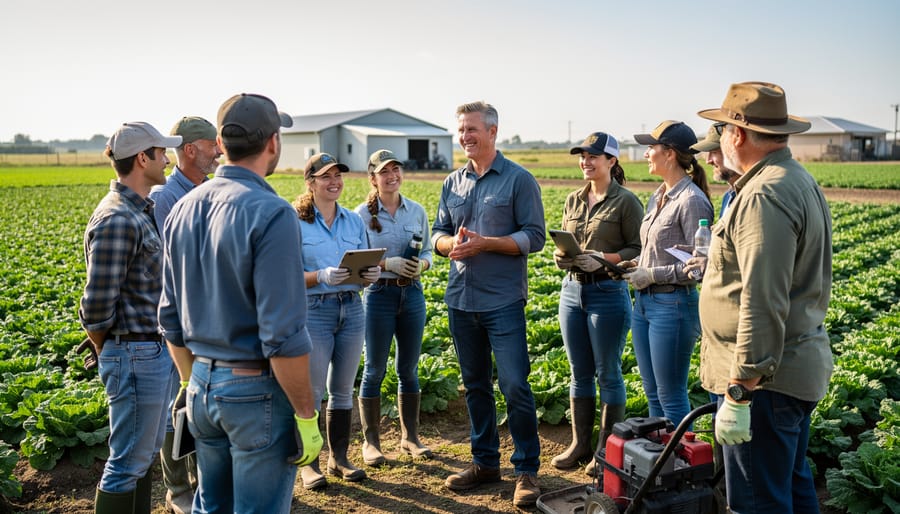
James Kowalski runs a 240-hectare mixed grain and cattle operation near Leduc. Three years ago, he realized his seasonal labor practices needed an overhaul when he struggled to find returning workers.
“I was paying minimum wage, housing was an afterthought, and I expected people to work whatever hours the harvest demanded,” James admits. “When nobody came back the second year, I had to take a hard look at what I was offering.”
His first step was conducting exit interviews with former workers. The feedback was eye-opening: unpredictable schedules, substandard accommodation, and lack of safety training topped the list of concerns.
James made several changes. He renovated his bunkhouse to meet provincial health standards, implemented fixed eight-hour shifts with overtime pay at time-and-a-half, and created written job descriptions with clear expectations. He also started paying 15 percent above minimum wage and introduced a performance bonus system.
“The upfront costs were significant, about $35,000 for housing upgrades and increased wages,” he notes. “But within one season, I saw returns. Worker retention jumped to 80 percent, productivity increased because experienced staff knew the equipment, and I spent less time training new people.”
James also discovered an unexpected benefit: better community reputation. “Word travels fast in rural Alberta. Now I have workers reaching out to me, and I can be selective about who I hire. Quality employees make all the difference during those critical harvest windows.”
His advice to other farmers? “Start small, but start somewhere. Even one improvement sends a message that you value your workers.”
What Agricultural Labor Experts Say About ROI
Agricultural labor specialists across Canada consistently report that ethical labor practices deliver measurable returns that extend far beyond moral satisfaction. Dr. Sarah Mitchell, a labor economics researcher at the University of Alberta, has tracked turnover rates among Alberta farms and found that operations with comprehensive worker benefits programs experience 40-60% lower turnover compared to industry averages. This translates to significant cost savings, as replacing a trained agricultural worker typically costs between $3,000 and $8,000 when accounting for recruitment, training, and productivity losses during the transition period.
Beyond retention, productivity gains represent another compelling benefit. Tom Brennan, who consults with vegetable producers across the prairies, notes that farms providing fair wages, safe working conditions, and clear communication channels see productivity increases of 15-25% within the first growing season. Workers who feel valued and secure demonstrate greater attention to detail, resulting in reduced crop damage and higher quality yields that command premium prices at market.
Community reputation matters more than many producers realize. Farms known for treating workers well attract better candidates, establish stronger relationships with local suppliers, and often receive preferential consideration from restaurants and retailers seeking ethically-sourced products. These advantages create a competitive edge that strengthens long-term business sustainability while contributing positively to rural communities across Alberta.
Building Your Own Ethical Labor Framework
Start With an Honest Assessment
Before implementing changes, you need to know where you currently stand. This honest evaluation isn’t about judgment—it’s about creating a baseline for improvement.
Start with a wage comparison. Review what you’re paying workers against Alberta’s minimum wage and industry standards for similar roles. Consider whether wages account for the seasonal nature of farm work and whether workers can reasonably afford local living costs.
Next, conduct a safety audit. Walk through your operation with fresh eyes, identifying potential hazards from equipment operation to chemical storage. Check that you have proper protective equipment available and that workers know how to use it. Document any gaps between your current practices and WorkSafeBC or provincial safety standards.
Establish worker feedback mechanisms if you haven’t already. This could be as simple as monthly check-ins or anonymous suggestion boxes. The key is creating space where workers feel comfortable sharing concerns without fear of retaliation.
Finally, review housing quality if you provide accommodation. Assess basics like adequate heating for Canadian winters, proper ventilation, functional plumbing, and sufficient space per person. Compare conditions against what you’d consider acceptable for your own family.
Document everything you find. This honest snapshot becomes your roadmap for meaningful improvements that genuinely benefit your workers and strengthen your operation.
Small Changes With Big Impact
You don’t need a massive budget to create meaningful change on your farm. Start with communication improvements—regular team meetings, clear job descriptions, and an open-door policy cost nothing but build trust immediately. Consider implementing a simple suggestion box where workers can share ideas anonymously.
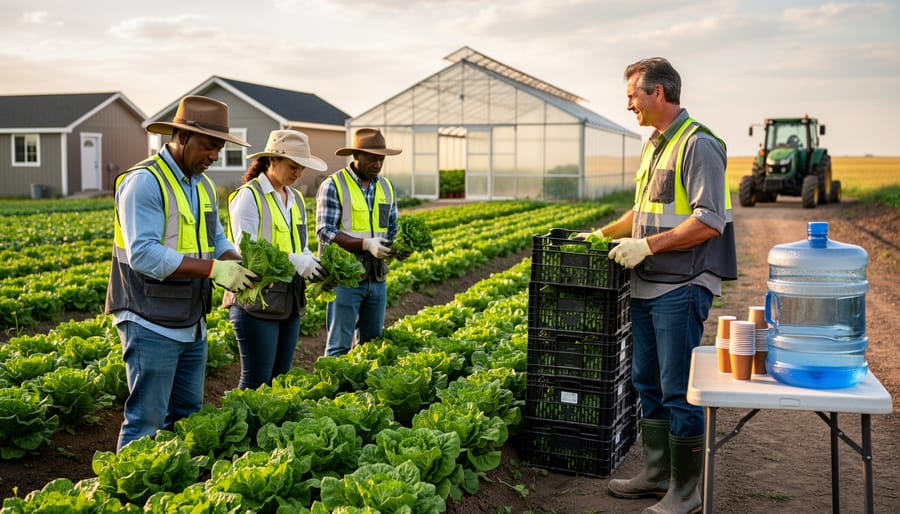
Safety equipment represents one of the most important investments you can make. Basic items like proper gloves, sun protection, and first aid kits are inexpensive but demonstrate your commitment to worker wellbeing. Create designated rest areas with shade and seating where your team can take proper breaks—even a simple canopy and water cooler makes a difference during Alberta’s hot summer days.
Recognition programs boost morale without breaking the bank. A monthly employee spotlight, celebrating work anniversaries, or acknowledging someone who went above and beyond costs little but significantly impacts workplace culture. Manitoba farmer Sarah Chen reports that her simple “thank you” program reduced turnover by 30 percent in one season.
These small steps create immediate improvements while building momentum for larger changes. Workers notice when you prioritize their comfort and safety, and that goodwill translates into increased productivity, better retention, and a stronger reputation in your community.
Resources and Support for Alberta Farmers
Alberta farmers looking to enhance their labor practices have access to several valuable support systems. The Canadian Agricultural Partnership offers cost-share funding for projects that improve working conditions and training programs, with applications processed through the Alberta government’s agriculture department. Agriculture and Agri-Food Canada’s AgriStability and AgriInvest programs can help offset costs during the transition to new labor management systems.
The Alberta Federation of Agriculture provides resources and networking opportunities specifically designed for implementing ethical labor improvements. Their workshops connect farmers with peers who’ve successfully navigated similar changes, offering practical insights from real Alberta operations.
WorkSafeAlberta offers free consultations and resources to help farmers develop safer workplaces, including multilingual training materials and culturally appropriate safety programs. The organization’s agriculture-specific advisors understand the unique challenges of farm operations and can provide customized guidance.
For those hiring temporary foreign workers, the Agricultural Labour Information Network helps farmers stay compliant with federal regulations while treating workers fairly. Additionally, local agricultural colleges like Olds College and Lakeland College offer continuing education programs focused on modern workforce management.
Consider reaching out to your regional agricultural service board for information about local grants and mentorship programs that can support your journey toward improved labor practices.
The Community Ripple Effect
When farms adopt ethical labor practices, the benefits extend far beyond individual operations—they create positive change that ripples throughout entire rural communities. Fair wages and safe working conditions mean farm workers can better support local businesses, send their children to school, and invest in their own families. This increased economic stability helps strengthen rural communities by keeping money circulating locally and fostering stronger social connections.
One of the most significant impacts is agriculture’s growing appeal to the next generation. Young people increasingly seek careers aligned with their values, and farms with transparent, ethical practices are discovering they can attract younger workers who might otherwise pursue urban opportunities. Sarah Chen, a third-generation Alberta grain farmer, saw this firsthand when she implemented worker profit-sharing and flexible scheduling. “We had five applicants in our twenties apply for seasonal positions this year—that hasn’t happened in a decade,” she notes.
The integrity of the entire farm-to-table chain also strengthens when ethical practices become standard. Restaurants and retailers increasingly seek suppliers who can verify fair treatment of workers, viewing it as essential to their brand reputation. Alberta-based Springbank Dairy found that documenting their labor practices opened doors to premium markets willing to pay 15-20 percent more for products with verified ethical sourcing.
This transparency builds consumer trust and loyalty. When your community knows you treat workers fairly, it enhances your farm’s reputation and creates authentic connections that mass-produced food simply cannot replicate. The ripple effect ultimately returns to you through stronger customer relationships and sustained market access.
Building a truly sustainable farm-to-table system isn’t just about what we grow—it’s about how we grow it and who helps us along the way. Ethical labor practices aren’t an optional addition to sustainability; they’re the foundation that everything else stands on. Without fair treatment, safe conditions, and respect for the people who work our land, we’re missing the heart of what sustainable agriculture really means.
The good news? You don’t have to transform everything overnight. Progress happens one step at a time, whether that’s starting a conversation with your workers about their needs, reviewing your safety protocols, or simply documenting the hours people actually work. Every small improvement matters.
Remember, you’re not alone in this journey. Across Alberta and throughout Canada, farmers are having these same conversations and making these same changes. Some are further along, some are just starting—and that’s perfectly okay. This isn’t about judgment or competition; it’s about collective progress toward a better agricultural community.
Start where you are. Maybe that means attending a workshop on labor regulations, connecting with other farmers who’ve implemented ethical practices, or reaching out to local agricultural organizations for guidance. The resources and support are there when you’re ready to use them.
Your commitment to ethical labor practices strengthens not just your own operation, but the entire farm-to-table movement. When we prioritize people alongside productivity, we create agricultural systems that truly sustain—our land, our communities, and our future.