The gap between growing exceptional crops and building a profitable farm operation often comes down to entrepreneurial thinking. Canadian farmers who combine agricultural expertise with business acumen are weathering market volatility, accessing premium markets, and building resilient operations that thrive across generations.
Agricultural entrepreneurship means approaching your farm as both a production system and a business enterprise. It requires identifying untapped opportunities in your local food system, developing value-added products that capture more of the consumer dollar, and building direct relationships with customers who value your sustainable practices. Alberta farmers are leading this shift by transforming commodity operations into diversified enterprises that include agritourism, farm-to-table partnerships, and specialty crop production.
The business skills that drive success extend beyond production knowledge. Effective financial planning allows you to reinvest profits strategically rather than reactively. Market research reveals which crops or products command premium prices in your region. Customer relationship management transforms one-time buyers into loyal advocates who market your farm through word-of-mouth.
This entrepreneurial approach doesn’t compromise your commitment to soil health, biodiversity, or environmental stewardship. Rather, it strengthens sustainability by improving profitability, which provides resources for conservation practices, equipment upgrades, and weather-related challenges. Farmers who master both agricultural science and business fundamentals create operations that support their families, employ their communities, and regenerate the land simultaneously.
The following strategies demonstrate how Canadian farmers are implementing entrepreneurial principles while maintaining their dedication to responsible land management.
Why Canadian Farmers Need Entrepreneurial Skills Now More Than Ever
The Changing Economics of Alberta Agriculture
Alberta farmers are navigating significant economic shifts that present both challenges and opportunities for entrepreneurial thinking. Recent provincial data shows input costs have increased by 23% since 2019, with fertilizer and fuel representing the largest expense categories. Meanwhile, net farm income has fluctuated considerably, making diversification strategies increasingly important for long-term viability.
The good news? Market demand for organic and sustainable products continues to grow. Alberta’s organic sector has expanded by 15% annually over the past three years, with certified organic farmland now covering over 100,000 hectares across the province. Consumer willingness to pay premium prices for locally-grown, sustainable products creates genuine opportunities for farmers willing to adapt their operations.
Consider the experience of Sarah Chen, who transitioned her family’s conventional grain operation near Red Deer to include 40 hectares of organic lentils and chickpeas. “The certification process took three years, but our margins improved by 35%,” she explains. “We found buyers through farmers’ markets initially, then secured contracts with Edmonton-based food processors.”
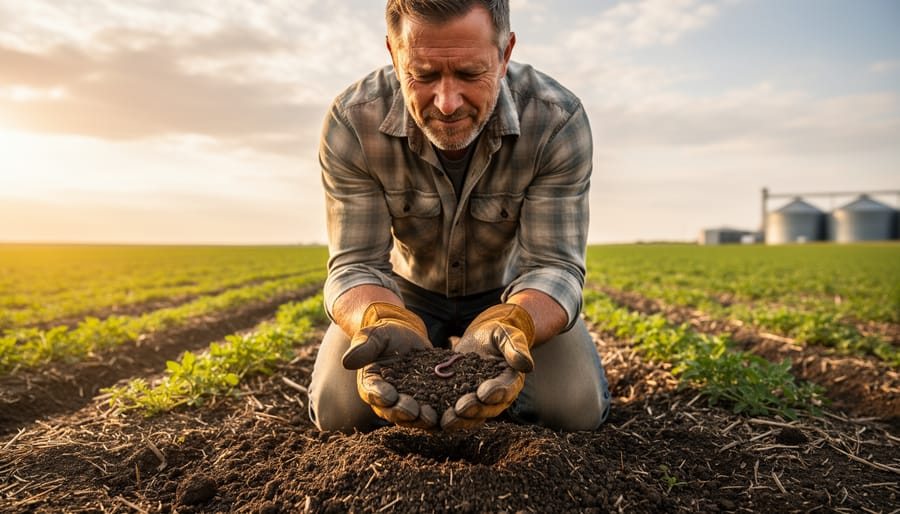
Weather volatility remains a concern, with Alberta experiencing more frequent drought conditions. However, farmers adopting regenerative practices report improved soil moisture retention and reduced erosion, demonstrating how sustainable methods can build economic resilience alongside environmental benefits.
What Entrepreneurship Actually Means for Farmers
When you hear “entrepreneurship,” you might picture tech startups or corporate boardrooms, but agricultural entrepreneurship looks quite different. It’s about applying innovative thinking to solve real farm challenges, whether that’s finding new markets for your crops, developing value-added products, or improving operational efficiency.
At its core, entrepreneurship in farming means taking calculated risks to create additional value from your land and labour. You’re already doing this when you trial a new crop variety, invest in equipment that saves time, or explore direct-to-consumer sales. It doesn’t require abandoning traditional practices or completely transforming your operation overnight.
Consider Alberta farmer Sarah Chen, who started small by converting a portion of her grain operation to grow specialty lentils for local restaurants. She didn’t overhaul her entire farm, she tested the market with manageable risk while maintaining her core business. Within three years, those relationships evolved into a steady income stream that improved her farm’s financial resilience.
Entrepreneurship is simply about viewing your farm as a dynamic business where you can actively shape outcomes rather than just responding to market forces. It complements sustainable agriculture beautifully because both require creativity, adaptability, and long-term thinking.
Building Your Farm Business Foundation Through Agro-Education
Essential Business Skills Every Farmer Should Develop
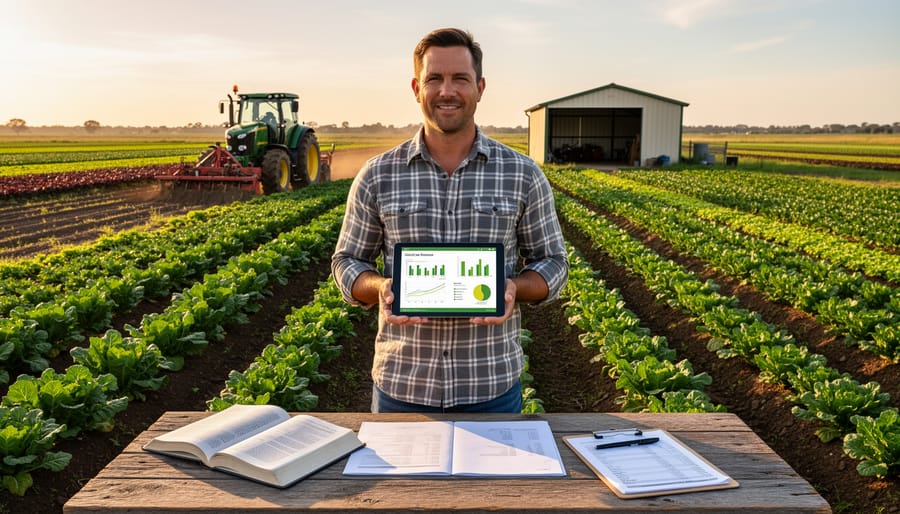
Success in agricultural entrepreneurship requires more than growing skills—it demands solid business fundamentals adapted to farming realities. Start with financial management, the backbone of any viable operation. Track your production costs per hectare, understand your break-even points, and maintain separate accounts for business and personal expenses. Many Alberta farmers use simple spreadsheets or farm-specific accounting software to monitor cash flow throughout seasonal cycles.
Marketing connects your products to customers willing to pay fair prices. Develop a clear value proposition—what makes your farm unique? Whether it’s regenerative practices, heritage varieties, or community-supported agriculture, communicate your story through farmers’ markets, social media, and direct relationships. One central Alberta vegetable grower increased revenue 40% by shifting from wholesale to direct sales, building customer loyalty through weekly email updates.
Customer relations build long-term sustainability. Listen to buyer feedback, respond promptly to inquiries, and deliver consistently on quality promises. Remember that satisfied customers become your most effective marketing tool through word-of-mouth recommendations.
Strategic planning helps you navigate uncertainty. Set annual goals, identify potential challenges from weather to market shifts, and create contingency plans. Integrate digital farm skills to streamline operations—from online marketplaces to precision agriculture tools that inform smarter decisions. Review your business plan quarterly, adjusting strategies as conditions change. These competencies transform farming from reactive survival to proactive growth.
Where to Access Quality Agro-Education in Canada
Building your entrepreneurial skills doesn’t require leaving the farm. Canadian farmers have access to numerous educational resources designed specifically for agricultural business development.
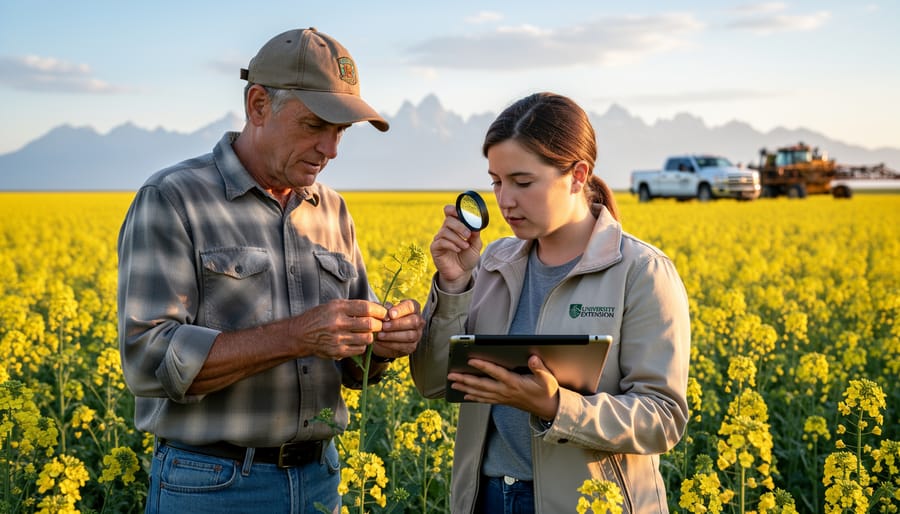
The University of Alberta’s Faculty of Agricultural, Life & Environmental Sciences offers specialized business courses tailored to farm operations, covering everything from financial planning to market analysis. Their extension programs bring experts directly to rural communities, making advanced education accessible regardless of your location.
Online platforms have revolutionized agro-education accessibility. FarmLead and the Canadian Agricultural Partnership provide free webinars on marketing strategies, risk management, and succession planning. These flexible options allow you to learn during off-season months or quieter periods.
In Alberta, farm-based learning opportunities connect you with experienced agricultural entrepreneurs. Organizations like Olds College’s Smart Farm initiative demonstrate innovative technologies and business models in real working environments, providing hands-on experience with precision agriculture and value-added production.
Local agricultural societies and commodity groups regularly host workshops addressing entrepreneurial topics. The Alberta Agriculture and Forestry department coordinates regional learning circles where farmers share practical business insights and problem-solve together.
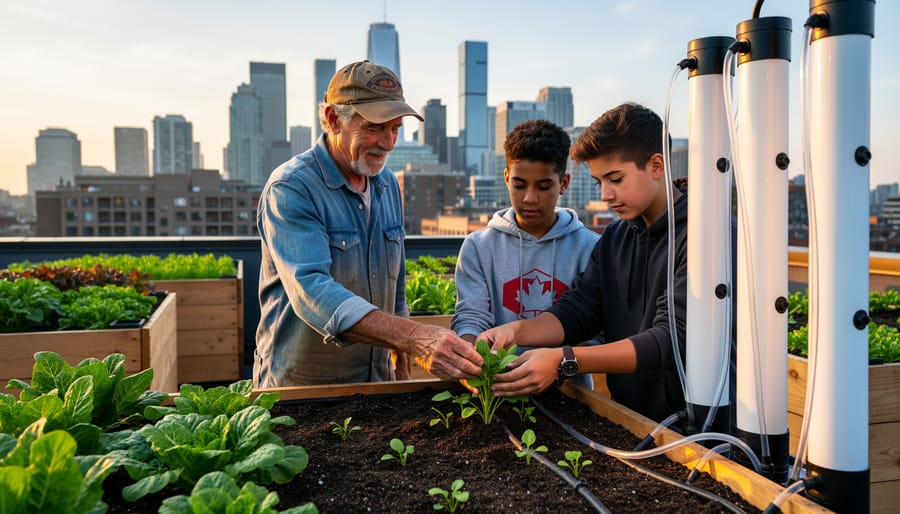
Consider connecting with mentorship programs through Alberta Women in Agriculture or Young Farmers of Alberta. These networks pair emerging entrepreneurs with established farmers who’ve successfully navigated business challenges.
Community colleges across Canada, including Lethbridge College and Lakeland College, offer certificate programs in agricultural business management, often available through evening or weekend formats to accommodate farming schedules. Many programs incorporate case studies from Canadian farms, ensuring content reflects your reality.
Turning Sustainable Practices Into Profit Centers
Premium Markets for Sustainably-Grown Products
Sustainably-grown products command premium prices when marketed to consumers who prioritize environmental stewardship and food quality. The key is connecting your farm directly with these values-driven buyers through strategic market channels.
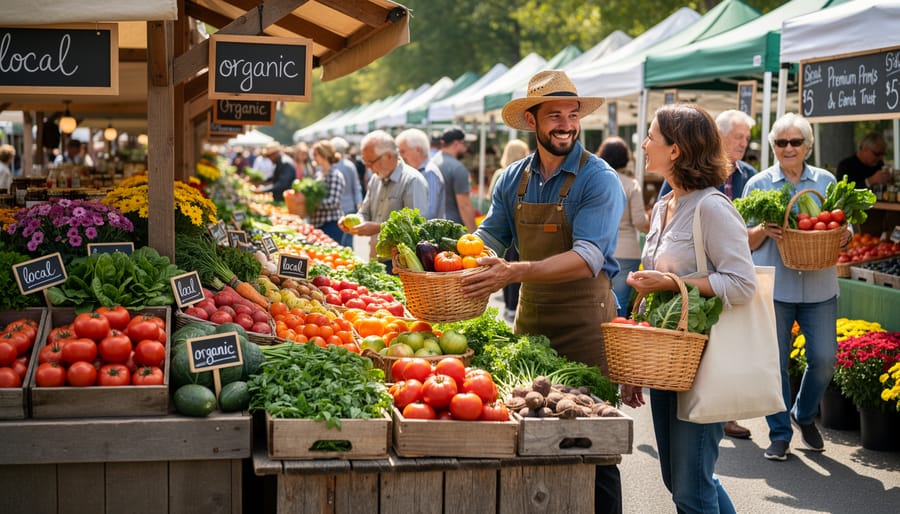
Direct-to-consumer markets offer the highest profit margins by eliminating middlemen. Consider starting with farmers markets, where Alberta producers report earning 30-50% more than wholesale prices. Community Supported Agriculture (CSA) programs provide upfront capital and guaranteed sales, with successful Alberta farms supporting 50-200 member families annually.
Specialty retailers like organic grocery stores and farm-to-table restaurants actively seek local sustainable suppliers. When approaching these buyers, bring clear documentation of your growing practices, organic certification if applicable, and consistent supply projections.
Digital platforms expand your reach significantly. Online farm stores, subscription box services, and social media marketing help you tell your sustainability story while building customer relationships. Calgary farmer Jennifer Morrison increased her organic vegetable sales by 300% within two years by combining Instagram storytelling with weekend farm gate sales.
Start small by testing one channel, gathering customer feedback, and gradually expanding your market presence. Premium pricing requires premium presentation, so invest in attractive packaging and clear labeling that communicates your sustainable practices and product benefits.
Cost Savings Through Regenerative Agriculture
Alberta rancher David Thompson reduced his fertilizer costs by 40% within three years of adopting regenerative practices on his 800-hectare cattle operation. By implementing rotational grazing and cover cropping, he increased soil organic matter from 2.8% to 4.1%, which naturally improved nitrogen availability and water retention.
Saskatchewan grain farmer Maria Chen saw similar results, cutting her herbicide applications by half after two seasons of diverse crop rotations combined with targeted inter-row cultivation. Her wheat yields remained stable at 3.2 tonnes per hectare while her input costs dropped by $62 per hectare annually.
These savings stem from healthier soil biology doing work that previously required purchased inputs. Enhanced microbial activity breaks down organic matter, releasing nutrients plants can access. Improved soil structure reduces irrigation needs and erosion losses. One Manitoba study tracked 25 farms over five years, finding participants reduced combined fertilizer and pesticide spending by an average of 35% while maintaining yields within 5% of conventional benchmarks.
The transition period typically requires two to four growing seasons before cost reductions become significant, but early adopters consistently report improved cash flow and greater resilience during drought conditions once soil health improves.
New Revenue Streams: Agritourism and Education
Diversifying your farm’s income doesn’t mean abandoning production—it means sharing your story while generating reliable revenue. Agritourism and educational programs offer Alberta farmers proven ways to strengthen financial stability through farm tours, hands-on workshops, and seasonal experiences that connect urban consumers with rural realities.
Consider hosting weekend farm tours that showcase your sustainable practices, from regenerative grazing systems to organic vegetable production. Many Alberta operations charge $15-25 per adult for guided experiences, creating steady income during shoulder seasons. Workshops teaching skills like cheese-making, beekeeping, or preserving heritage seeds typically attract 10-20 participants at $75-150 per session.
Educational programs particularly resonate with schools and community food systems seeking field-trip destinations. A central Alberta grain farm now generates $30,000 annually by hosting student groups who learn about crop rotation and soil health—revenue that helps offset market volatility.
Start small: identify your farm’s unique story, assess your liability insurance coverage, and develop one signature experience. Many successful agritourism ventures began with simple harvest events before expanding into year-round programming. This approach not only diversifies income but also builds customer loyalty and community support for your operation.
Real Stories: Alberta Farmers Who Made It Work
Case Study 1: From Conventional to Organic Market Leader
Sarah Chen’s journey from conventional grain farming to becoming a recognized organic market leader demonstrates how education combined with entrepreneurial thinking can transform a struggling operation. Based near Red Deer, Sarah inherited her family’s 240-hectare farm in 2015, facing declining commodity prices and mounting input costs.
The turning point came when Sarah enrolled in an agricultural entrepreneurship program at Olds College. “I learned to see my farm as a business, not just a production unit,” she explains. The program introduced her to market analysis, consumer trends, and direct-marketing strategies that would reshape her entire operation.
Sarah’s transition to organic production wasn’t immediate. She spent two years studying soil health, attending organic farming workshops, and connecting with experienced organic producers through Alberta’s organic farming networks. The three-year transition period proved financially challenging, but Sarah used this time strategically, developing relationships with local restaurants and retailers interested in sourcing organic ingredients.
Today, her farm supplies fifteen restaurants across central Alberta and operates a thriving Community Supported Agriculture program with 120 member families. Her diversified product line includes heritage wheat varieties, lentils, and specialty oilseeds, commanding premium prices that conventional markets couldn’t match.
The biggest challenge? “Letting go of conventional farming’s comfort zone,” Sarah admits. “But the education gave me confidence that informed risk-taking, combined with relationship-building skills, could create something sustainable both environmentally and economically.” Her gross revenue has increased 180 percent since completing the transition.
Case Study 2: Value-Added Processing on a Mid-Size Operation
When Sarah Mitchell took over her family’s 160-hectare grain operation near Lacombe, Alberta, she recognized that selling raw wheat and barley as commodities left little room for profit growth. Her entrepreneurial solution transformed the farm’s trajectory: she invested in small-scale milling equipment and began producing stone-ground flour and specialty grain products under her own brand, Prairie Heritage Grains.
The transition wasn’t without challenges. Sarah started small, processing just 10 percent of her harvest while maintaining her commodity sales. She invested approximately $45,000 in a commercial mill and packaging equipment, securing financing through a combination of Farm Credit Canada programs and personal savings. The key was testing the market before committing fully.
Sarah focused on what made her products unique: heritage wheat varieties grown using sustainable practices, transparent farming stories, and traceability from field to bag. She developed relationships with local bakeries and farmers’ markets, positioning her flour as a premium product. Within three years, her processed products commanded prices 300 percent higher than bulk commodity rates.
Today, value-added sales account for 60 percent of Sarah’s revenue, and she’s expanded to include pancake mixes and specialty grains. She employs two part-time staff during peak processing seasons and has created an educational component, offering farm tours that connect consumers to their food sources.
Sarah’s advice to other farmers considering value-added processing is straightforward: start with one product, understand your costs completely including labour and packaging, and build authentic customer relationships. She emphasizes that success came from patience and willingness to adapt based on customer feedback rather than trying to scale too quickly.
Your Action Plan: First Steps Toward Agricultural Entrepreneurship
Assess Your Current Farm Business
Before pursuing new entrepreneurial ventures, take stock of where you stand today. Start with a straightforward assessment of your current operations using three key areas: resources, performance, and market position.
First, inventory your tangible assets—land (measured in hectares), equipment, infrastructure, and labour capacity. Then evaluate your intangible strengths like specialized knowledge, established relationships with buyers, or unique growing conditions. Many Alberta farmers discover untapped potential in underutilized barn space, excess pasture, or specialized skills gained through years of experience.
Next, review your financial performance over the past three seasons. Look beyond total revenue to examine profit margins by enterprise. Which crops or livestock generate the strongest returns? Where do you consistently excel? Saskatchewan grain farmer Marcus Chen realized his farm’s real strength wasn’t in volume production but in his reputation for quality organic cereals, which commanded premium prices.
Finally, identify gaps and opportunities. Are there customer requests you can’t currently fulfill? Seasonal downtime you could leverage? Local market needs going unmet? This honest evaluation creates your roadmap for entrepreneurial development, revealing where strategic changes could strengthen both profitability and sustainability without requiring massive investment or abandoning your core values.
Create Your Learning and Implementation Timeline
Start by mapping your farm’s seasonal demands across the calendar year. Identify slower periods when you can dedicate time to learning—many Alberta farmers find November through February ideal for online courses or business planning workshops. During peak seasons like seeding and harvest, limit educational activities to brief podcasts or audiobooks you can absorb while working.
Break your entrepreneurial development into manageable phases. Begin with foundational skills like basic financial analysis during winter months, then apply these concepts in real-time during the growing season. For example, Saskatchewan farmer Marcus Chen spent January learning about direct-to-consumer marketing, then tested a small farm stand operation the following summer before scaling up.
Set realistic expectations by committing to just one new business strategy per year. This prevents overwhelm while building momentum. Prioritize activities that address your most pressing challenge first—whether that’s diversifying income streams, reducing input costs, or reaching new markets.
Connect with local agricultural organizations and peer networks to share learning resources and accountability. Many farmers find that community study groups or monthly check-ins help maintain progress without adding pressure during busy periods. Remember, sustainable entrepreneurship development happens through consistent small steps, not dramatic overhauls that disrupt your existing operations.
Connect With Your Agricultural Community
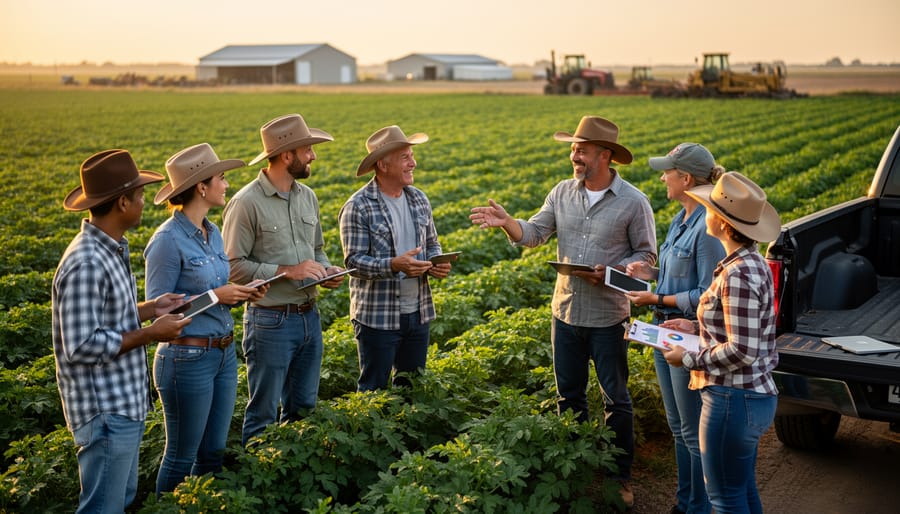
Building a successful agricultural enterprise doesn’t happen in isolation. Connecting with fellow farmers and agricultural professionals provides invaluable support, fresh perspectives, and practical solutions to challenges you’ll face. Peer learning networks allow you to share experiences, discover what’s working on other farms, and avoid costly mistakes.
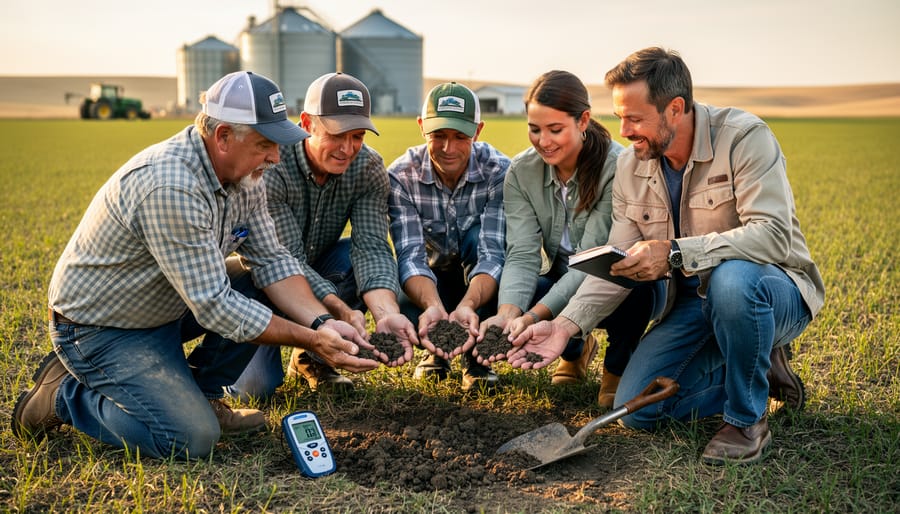
Start by attending local agricultural events, workshops, and field days in your region. Organizations like the Alberta Farm Business Management Program and regional agricultural societies offer regular opportunities to meet mentors and peers who understand your specific challenges. Consider joining commodity-specific groups or online forums where farmers discuss everything from marketing strategies to equipment choices.
Don’t underestimate the value of mentorship. Experienced farmers who’ve successfully navigated the entrepreneurial journey can provide guidance tailored to Alberta’s unique growing conditions and market opportunities. Many are willing to share their knowledge when approached respectfully. These connections transform entrepreneurship from a solitary struggle into a collaborative journey toward sustainable profitability.
Embracing entrepreneurship in agriculture doesn’t mean turning your back on the values that brought you to farming in the first place. It’s about equipping yourself with the tools to keep doing what you love for years to come. The Alberta farmers who’ve adopted value-added approaches, diversified their income streams, or strengthened their direct-to-consumer relationships haven’t abandoned their commitment to the land—they’ve secured it. These business strategies aren’t about becoming something you’re not; they’re about ensuring your operation remains viable through changing markets and unpredictable seasons.
The good news is that meaningful change doesn’t require dramatic overnight transformation. Start with one small step—perhaps conducting a simple cost analysis on a single crop, exploring one new market channel, or connecting with a fellow farmer who’s successfully diversified. Each action builds confidence and creates momentum. You don’t need a business degree to think entrepreneurially; you need curiosity, willingness to learn, and the courage to try something new.
Support is available when you’re ready to take that next step. Organizations like Agriculture Financial Services Corporation, Alberta Agriculture and Irrigation, and local agricultural societies offer workshops, mentoring programs, and financial planning resources specifically designed for producers. Your regional agricultural extension offices connect you with experts who understand both the business side and the farming realities you face daily. The farming community thrives when we share knowledge and lift each other up—reach out, ask questions, and remember that sustainable profitability strengthens not just your operation, but the entire agricultural sector we all depend on.