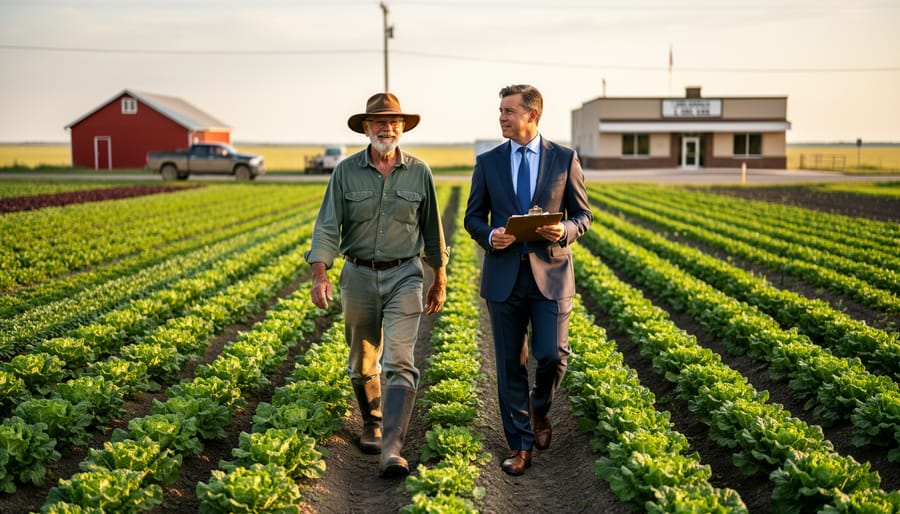
Understand the Income Tax Act’s distinction: advocacy becomes lobbying when you directly communicate with public office holders about changing laws, regulations, or policies. Track your activities carefully—Canadian registered charities can spend up to 10% of their resources on political activities, while non-profits face stricter limitations depending on their structure.
Document every policy-related conversation and public communication. When your organization meets with municipal councillors about pesticide bylaws or speaks at Agricultural Service Board meetings regarding organic certification standards, you’re likely lobbying. When you educate farmers about soil health benefits or publish research on organic practices without directing it toward specific legislative outcomes, you’re engaged in advocacy. This distinction matters deeply for Alberta farmers building policy networks around organic agriculture.
Frame your communications strategically. Instead of telling a Member of the Legislative Assembly to vote for Bill X supporting organic farming subsidies, present peer-reviewed data on economic benefits of organic practices in your region and invite them to farm tours. This shifts from direct lobbying to educational advocacy while still influencing decision-makers.
The stakes are real for your organization’s future. Alberta’s organic farming community has successfully influenced municipal composting programs, water quality standards, and procurement policies by understanding these legal boundaries. Misclassifying lobbying as advocacy can trigger CRA audits, financial penalties, or loss of charitable status. Conversely, avoiding all policy engagement out of fear means missing opportunities to shape the agricultural landscape.
Whether you’re a county-level producer group or a regional agricultural society, knowing when you’re advocating versus lobbying determines how boldly you can advance organic practices in your community while protecting your organization’s standing.
What Actually Counts as Lobbying in Canada
The 10% Rule Nobody Explains Properly
The Canada Revenue Agency’s 10% rule often confuses agricultural nonprofits, but it’s simpler than most people think. Here’s what you actually need to know.
The CRA allows registered charities to spend up to 10% of their total resources on political activities. The key word is resources, not just money. This includes your budget, donated goods, and volunteer hours. For a small farming organization with a $50,000 annual budget, you have roughly $5,000 worth of resources available for political activities.
Calculating volunteer time is where many groups get tripped up. The CRA expects you to assign fair market value to volunteer work. If a retired agronomist volunteers 20 hours helping draft a letter to your municipal council about organic certification standards, and similar professional services cost $75 per hour, that’s $1,500 of your political activity allocation used.
Let’s look at a practical example. The Peace Country Organic Producers in northern Alberta wanted to advocate for changes to local pesticide bylaws. Their annual budget was $30,000, giving them $3,000 for political activities. They spent $800 on printing materials for a council presentation, and volunteers contributed 25 hours valued at $50 per hour (totaling $1,250). Their total political activity spending reached $2,050, keeping them well within the allowable threshold.
The important practice here is documenting everything. Track volunteer hours, assign realistic values, and maintain clear records. This protects your organization during CRA reviews and helps you maximize your advocacy impact while staying compliant.
When You Need to Register as a Lobbyist
Understanding when to register as a lobbyist helps you advocate confidently within legal boundaries. In Canada, registration requirements kick in when you cross specific thresholds of lobbying activity.
At the federal level, the Lobbying Act requires registration when you’re paid to communicate with public office holders about policy changes, legislation, or government funding. However, grassroots agricultural organizations often qualify for exemptions. If you’re a farmer or agricultural professional volunteering your time to advocate for organic farming policies, you typically don’t need to register. The key factor is whether lobbying forms a significant part of paid duties.
In Alberta, the Lobbyists Act sets clear triggers. Registration becomes necessary if you spend 50 hours or more in a three-month period lobbying provincial officials as part of paid work. For example, if your farm cooperative hires someone specifically to meet with MLAs about pesticide regulations, that position likely requires registration.
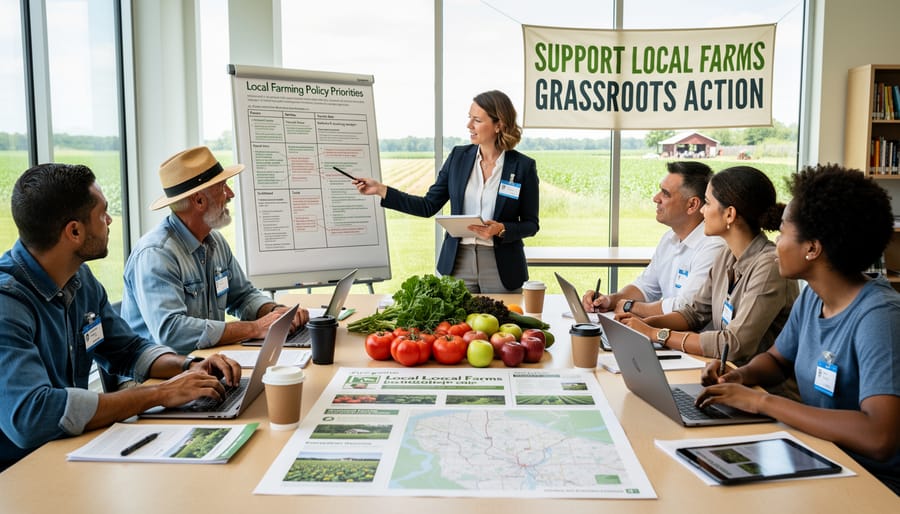
Here’s the good news for community-based groups: most grassroots advocacy falls outside these requirements. When you and fellow farmers organize to submit a petition about soil health standards, attend town halls, or write letters to your local representative, you’re exercising your democratic rights without triggering registration.
The exemption typically applies when you’re representing your own interests rather than being paid by a third party. Sarah Chen, an agricultural policy consultant in Red Deer, explains: “I’ve seen countless farm groups effectively influence municipal composting bylaws and county land-use policies without ever needing to register. They’re simply citizens participating in democracy.”
If you’re unsure about your specific situation, Alberta’s Office of the Ethics Commissioner offers free guidance to help you determine your obligations.
Advocacy That Keeps You in the Clear
Educational Campaigns That Change Minds (and Policy)
Public education initiatives represent your most powerful advocacy tool that falls squarely outside lobbying restrictions. When you share knowledge about organic practices, soil health, and pesticide reduction, you’re building grassroots support that naturally influences policy decisions without directly asking legislators to vote a certain way.
Community workshops offer an excellent starting point. The Alberta Organic Producers Association regularly hosts sessions where farmers learn about composting techniques, cover cropping strategies, and integrated pest management. These gatherings achieve dual purposes: participants gain practical skills while developing a shared understanding of why policy support for organic agriculture matters. You’re not lobbying when you teach someone how healthy soil sequesters carbon—you’re simply educating.
Farmer field days create even more impact through hands-on demonstration. Consider organizing tours of successful organic operations in your region. When neighbouring farmers see a thriving 160-hectare organic grain operation firsthand, they become natural advocates themselves. One central Alberta farmer who hosted field days in 2022 reported that three attendees subsequently contacted their municipal councillors about establishing local organic certification cost-share programs—advocacy that happened organically (pun intended) through education.
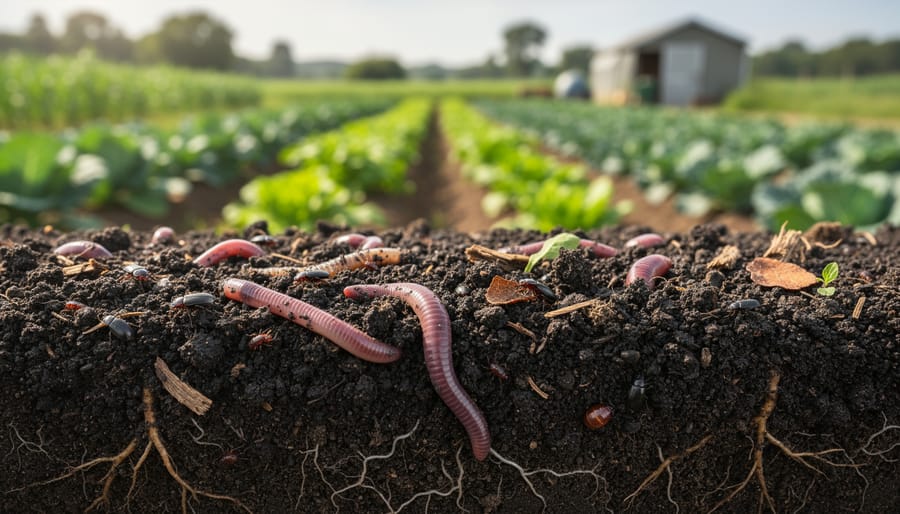
Soil health workshops addressing specific regional challenges resonate particularly well. Focus on measurable outcomes: demonstrate how reduced tillage increases water retention by 30 percent, or how companion planting decreased pest pressure without chemical inputs. When community members understand these benefits through practical evidence, they become informed voters and vocal supporters of policies promoting sustainable agriculture.
Documentation matters too. Record attendance numbers, collect testimonials, and photograph your events. This data demonstrates community interest when policymakers later consider organic agriculture initiatives.
Building Coalitions Without Crossing Lines
Building effective coalitions starts with identifying shared concerns across different groups. In Alberta, successful advocacy networks often unite grain farmers with livestock producers, organic organizations, Indigenous communities, and environmental groups around water quality or soil health initiatives. The key is focusing on outcomes rather than methods.
Start by hosting informal community meetings where participants can share their priorities without committing to specific actions. This creates trust while keeping activities firmly in advocacy territory. For example, a coalition might organize farm tours demonstrating regenerative practices, followed by roundtable discussions about municipal water protection policies.
Coordinate action through educational campaigns and public awareness efforts. Coalition members can co-sign fact sheets, participate in panel discussions, or organize demonstration projects that highlight policy needs without directly urging specific legislative action. Document your activities clearly, showing how each effort focuses on education rather than lobbying.
Remember that coalition strength comes from diversity of perspectives. When a municipal councillor attends your soil health field day, they’re learning from constituent experiences. That’s powerful advocacy that respects legal boundaries while building momentum for positive change in your agricultural community.
Using Data to Drive Change
Data-driven advocacy allows you to present compelling evidence without crossing into lobbying territory. When you share research findings, collect case studies, or publish reports about agricultural practices, you’re educating decision-makers rather than asking them to support specific legislation.
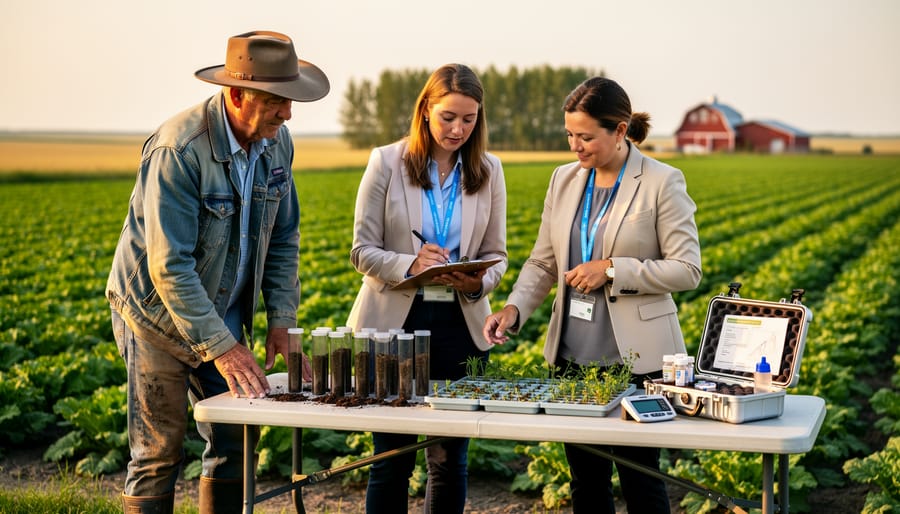
Consider this practical example: A farmer-led nonprofit in central Alberta gathered soil carbon sequestration data from 15 organic operations over three growing seasons. They compiled this information into a clear, accessible report showing how cover cropping and reduced tillage increased soil organic matter by an average of 1.2% over 36 months. The group presented these findings to their municipal council during an agricultural update session. Rather than requesting specific policy changes, they simply shared the research, allowing councillors to draw their own conclusions about the benefits of supporting organic farming practices.
This approach remains squarely within advocacy bounds because you’re providing information, not requesting specific legislative action. Your data becomes a resource that policymakers can reference when making informed decisions.
Effective data presentation includes documenting measurable outcomes from local farms, photographing soil health improvements, tracking economic impacts within your community, and interviewing neighbouring farmers about their experiences. When local governments request information about sustainable agriculture, your organization becomes a trusted knowledge source. This positions you to influence policy development naturally through education rather than direct lobbying efforts, keeping your nonprofit compliant while advancing organic farming priorities across your region.
Smart Lobbying Strategies for When You Need Them
Making Every Meeting with Decision-Makers Count
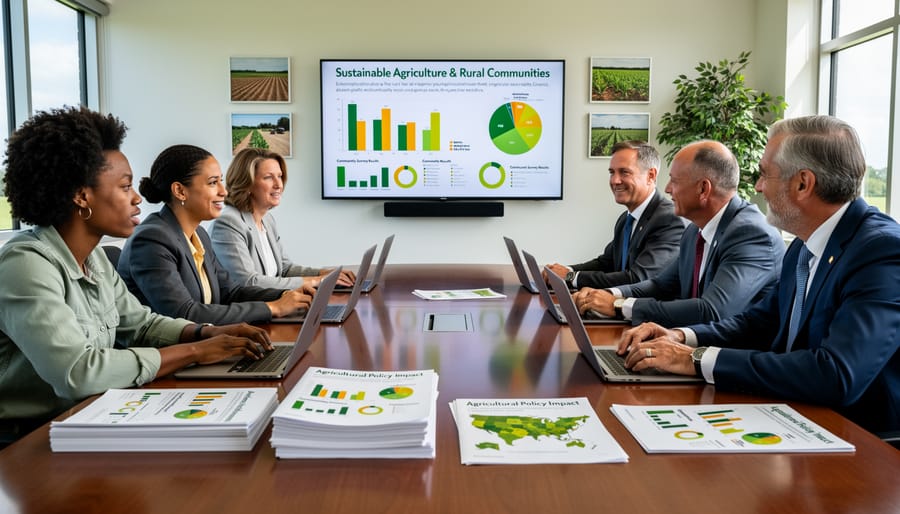
When you secure a meeting with your MLA, municipal councillor, or an official from Alberta’s agriculture ministry, preparation makes the difference between a productive conversation and a missed opportunity. These decision-makers often have tight schedules, so you’ll want to maximize every minute.
Start by confirming the meeting details and clarifying who will attend from your side. Bring no more than three representatives to keep the discussion focused. Prepare a one-page briefing document that outlines your issue, the impact on local farmers, and your specific request. Include concrete data where possible—for example, “23 organic producers in our county face challenges accessing transitional support programs.”
Frame your ask clearly and positively. Instead of saying “We need you to stop this regulation,” try “We’re asking you to support an amendment that would help 50 local farms transition to organic practices while maintaining productivity.” Decision-makers respond better to solutions than complaints.
Come prepared with a brief story that illustrates your point. When Sarah Chen, an organic grain farmer from Lacombe County, met with her MLA about organic certification costs, she brought her actual certification invoices and explained how the expense affected her family’s farm income. That tangible example made policy implications real.
Take notes during the meeting and clarify any commitments or next steps before leaving. Within 48 hours, send a thank-you email that summarizes the discussion and reiterates your ask. This creates a paper trail and keeps your issue visible. If the official requested additional information, provide it promptly—reliability builds trust for future conversations.
Tracking Your Activities (Before CRA Asks)
Good record-keeping protects your organization before questions arise. The CRA expects nonprofits to track lobbying activities accurately, but your system doesn’t need to be complicated.
Start with a simple spreadsheet that captures three key details: date, activity description, and time spent. When someone from your farming cooperative meets with a municipal councillor about organic certification standards, log it. If your treasurer estimates 10% of expenses support lobbying efforts, document how you reached that calculation.
A Prairie organic growers’ association shared their practical approach during a recent workshop in Red Deer. They use a monthly tracking sheet where volunteers check boxes for activities: “Met with elected official,” “Prepared policy brief,” or “Organized advocacy event.” Each box includes a time estimate. At year-end, they total the hours and compare them against their overall organizational activities.
Keep receipts for lobbying-specific expenses separately. If you print materials for a meeting with your Member of the Legislative Assembly about pesticide regulations, file that receipt in a designated folder. Digital photos of receipts work just as well as paper files.
Most volunteer-run farming organizations spend well under the 10% threshold, but documentation proves it. Your records become your strongest defence if the CRA ever requests clarification about your charitable activities versus political involvement.
When to Bring In the Experts
Complex policy issues, especially those involving municipal zoning changes or provincial regulations affecting organic certification, often benefit from professional guidance. Consider bringing in legal counsel when your advocacy efforts approach the 10% lobbying threshold or when you’re uncertain about compliance. For example, an Alberta farm cooperative seeking to influence new organic standards might consult a lawyer specializing in agricultural law to review their campaign materials and ensure proper documentation.
Professional lobbyists can be valuable for navigating relationships with government officials, particularly during critical legislative periods. Many non-profit farming organizations budget 2-5% of their annual resources specifically for occasional expert consultations. This strategic investment helps maximize your advocacy impact while staying well within legal limits. Start by identifying local professionals who understand both nonprofit regulations and agricultural policy, then establish relationships before urgent needs arise.
Real Examples from Alberta’s Organic Farming Community
How One Network Got Pesticide-Free Zones Without Lobbying
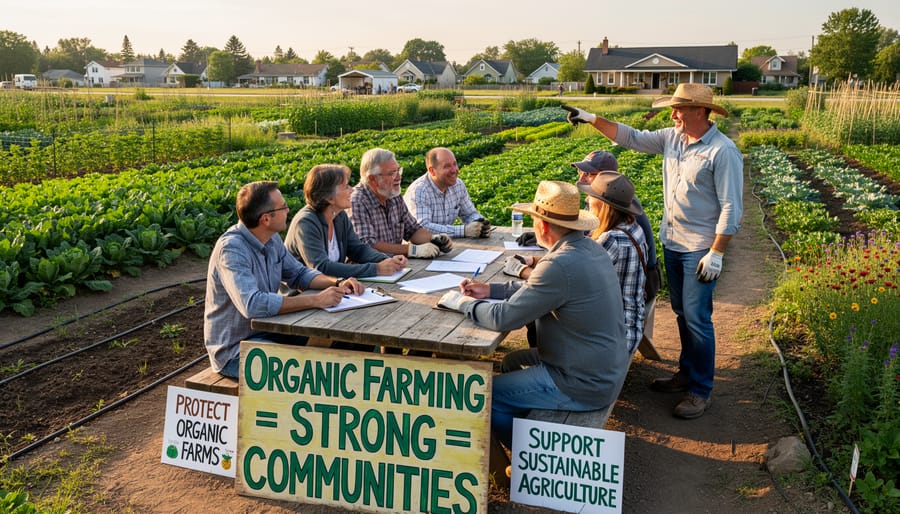
In 2019, a small network of organic growers in Lethbridge, Alberta, successfully influenced their municipality to restrict pesticide use in public parks and green spaces—without spending a dollar on lobbying efforts. The three-year campaign demonstrates how strategic advocacy can achieve meaningful policy change while staying within legal boundaries.
The network began in March 2019 when eight organic farmers launched an educational initiative. They organized monthly information sessions at the local library, inviting residents to learn about pesticide impacts on soil health and biodiversity. By December 2019, attendance had grown from 12 to 80 community members per session.
Their grassroots community approach focused entirely on education rather than direct legislative pressure. The team created fact sheets comparing conventional and pesticide-free maintenance costs, distributed at farmers’ markets and community centers. They invited municipal staff to farm tours showcasing integrated pest management techniques, with no requests for specific policy action.
By spring 2021, public awareness had shifted significantly. When the municipality conducted routine public consultations on park maintenance, over 200 residents independently requested pesticide-free policies. The council responded by implementing a phase-out plan covering 45 hectares of public land.
Measurable outcomes included a 72 percent reduction in synthetic pesticide use within two years, cost savings of approximately 8,000 dollars annually in maintenance expenses, and the establishment of three demonstration gardens using organic methods. The network never directly asked officials to change policy—they simply educated the community, who then advocated individually.
When Strategic Lobbying Made the Difference
In 2018, the Alberta Organic Producers Coalition faced a pivotal moment when provincial land-use regulations threatened to restrict organic farming practices on leased Crown land. The coalition had maintained a modest advocacy program for years, educating the public about organic benefits through newsletters and farm tours. However, when Bill 22 appeared on the legislative agenda with just six weeks before the vote, they needed a different approach.
The coalition calculated their lobbying capacity carefully, determining they could allocate 15 percent of their annual budget without exceeding federal limits. They invested those resources strategically: hiring a consultant familiar with Alberta’s legislative process, arranging three direct meetings with MLAs from rural constituencies, and preparing specific policy amendments with cost-benefit analyses.
The result? Two critical amendments passed, protecting organic certification standards on public lands and establishing a consultation process for future regulations. The key lesson? Timing matters immensely. The coalition’s executive director, Sarah Chen, reflected that their years of relationship-building through advocacy created credibility that made their lobbying efforts effective. “We couldn’t have succeeded with lobbying alone,” she noted. “But when the moment arrived, having that capacity available—and knowing exactly how to deploy it—protected thousands of hectares for organic production.”
This case demonstrates that strategic lobbying, used sparingly at critical junctures, can deliver concrete policy wins that advocacy alone cannot achieve.
Interview: From Grassroots to Government
We spoke with Maria Chen, executive director of the Central Alberta Organic Growers Association, about her organization’s work supporting local organic certification standards. “The line became clear when we moved from educating county officials about organic practices to actually asking them to vote for specific bylaw amendments,” Maria explains. “Our monthly farm tours and information sessions? Pure advocacy. But when we scheduled meetings with three specific councillors requesting they support Motion 47-2023 for pesticide-free zones near organic farms, we crossed into lobbying territory.”
Her organization now tracks these activities carefully. “We maintain a simple spreadsheet logging any direct requests to government officials, which helps us stay well under the allowable 10 percent threshold for lobbying activities,” she notes. This practical approach has allowed the association to maintain its charitable status while effectively influencing local agricultural policy, resulting in protective buffer zones that now benefit 34 certified organic operations across their region.
Building Your Local Advocacy Network the Right Way
Starting with the Right Legal Structure
Choosing the right legal structure sets the foundation for your advocacy work and determines what activities you can pursue. In Alberta, agricultural groups typically organize in three ways, each with distinct implications for advocacy and lobbying.
An informal network or coalition requires no registration and offers maximum flexibility for grassroots advocacy. You can share information, educate fellow farmers about organic practices, and coordinate environmental policy initiatives without legal restrictions. However, you cannot issue tax receipts or access certain grants.
A registered charity under the Canada Revenue Agency provides tax-exempt status and donation receipts but faces strict lobbying limits. Charities can spend up to 10 percent of resources on political activities, focusing primarily on education and research-based advocacy.
A non-profit society registered provincially offers middle ground. You gain legal recognition and liability protection while maintaining broader flexibility for lobbying activities. Many Alberta farm organizations choose this structure when regular policy engagement is central to their mission. Consider consulting with a lawyer familiar with agricultural nonprofits to determine which structure aligns with your goals and planned activities.
Creating Your Advocacy Action Plan
Building your advocacy action plan starts with identifying what matters most to your farming community. Begin by gathering input from local organic producers about their top policy concerns—whether that’s municipal composting regulations, provincial organic certification support, or county-level pesticide bylaws affecting buffer zones.
Map your stakeholders in three circles: core supporters (fellow farmers already committed to organic practices), potential allies (agricultural organizations, food co-ops, environmental groups), and decision-makers (municipal councillors, provincial MLAs, agricultural service board members). Understanding who influences policy helps you direct your efforts effectively.
Choose tactics that match your capacity and stay within legal boundaries. Educational workshops about organic soil health remain pure advocacy, while meeting with your MLA to request specific funding for organic transition programs crosses into lobbying territory. Track your lobbying hours if you’re part of a registered nonprofit.
Timing matters significantly in Alberta’s policy landscape. Municipal budgets typically finalize in November or December, so advocacy for local organic farming initiatives should begin by September. Provincial agricultural policy reviews often occur in spring sessions, making January through March ideal for connecting with MLAs about organic agriculture support.
Create a simple timeline: identify your priority issue by month one, map stakeholders by month two, and implement your chosen tactics by month three. Remember, Sarah Chen from Medicine Hat Organic Growers Association advises starting small—one achievable policy goal builds momentum for larger advocacy campaigns. Document your activities to demonstrate community education efforts rather than direct lobbying when appropriate.
Understanding the difference between advocacy and lobbying isn’t just about staying compliant—it’s about maximizing your impact as an organic farmer in Alberta. When you know where the legal boundaries lie, you can confidently push for the changes your community needs without putting your nonprofit status at risk.
The good news? Alberta’s agricultural community already has strong networks ready to support your efforts. Whether you’re concerned about pesticide regulations, organic certification processes, or access to local markets, there’s room for your voice in policy discussions. Start by connecting with your regional agricultural societies or organic farming associations. Many of these groups already engage in advocacy work and can guide you through the process.
If a formal network doesn’t exist in your area, consider starting one. Begin with informal conversations at farmers’ markets or through social media groups. Share concerns, identify common goals, and build from there. Remember, advocacy work—educating the public, sharing your farming story, mobilizing community support—doesn’t require special registration and forms the foundation of policy change.
For those ready to engage in direct lobbying, ensure you understand the Canada Revenue Agency’s guidelines for charities or consult with legal advisors familiar with agricultural nonprofits. Organizations like the Canadian Organic Growers provide resources and mentorship for farmers navigating policy work.
Your experience matters. Local decision-makers need to hear directly from farmers like you about how policies affect real operations. Take that first step today—reach out to a neighbouring farm, attend a municipal meeting, or share your story with local media. Strategic advocacy, grounded in community and guided by clear boundaries, amplifies your voice while protecting what you’ve built.