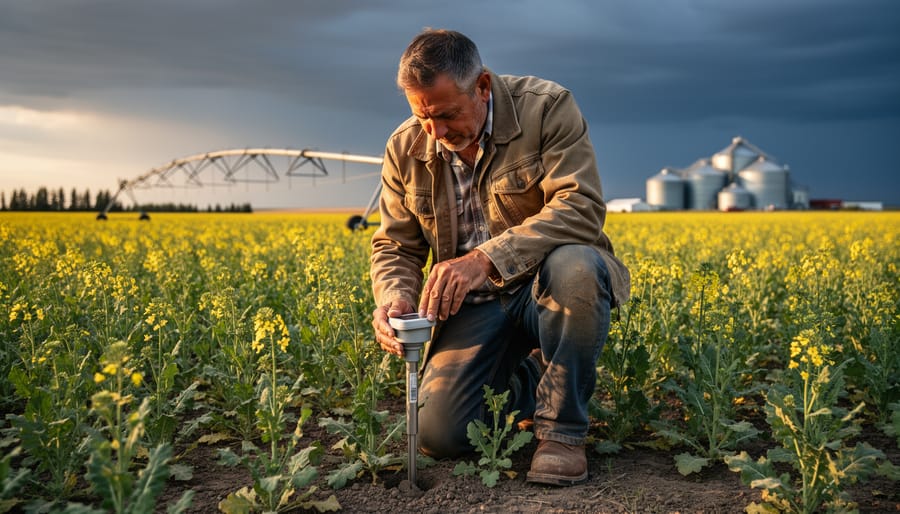
Climate variability is no longer a distant threat—it’s reshaping farm profitability across Canadian prairies right now. When a late spring frost wipes out your canola crop or prolonged drought cuts your cattle feed supply by 40%, the financial consequences can threaten operations you’ve spent decades building. Climate risk management gives you concrete tools to protect your farm’s financial stability while maintaining productive capacity through increasingly unpredictable weather patterns.
Understanding your farm’s specific climate vulnerabilities forms the foundation of effective protection. Prairie farmers face distinct challenges: spring flooding that delays seeding, summer heat waves that stress livestock, early fall frosts that damage unharvested crops, and winter precipitation extremes that affect feed storage and animal welfare. Each risk carries different financial implications depending on your operation’s structure, from grain-focused farms vulnerable to moisture timing to diversified operations managing multiple exposure points.
Financial tools designed for agricultural climate risk have evolved significantly beyond traditional crop insurance. Production insurance now covers yield losses from specific weather events, while revenue insurance protects against combined yield and price drops. Livestock price insurance shields against market volatility triggered by weather-related supply disruptions. AgriStability programs provide whole-farm income support when margins decline dramatically. Weather derivatives let you hedge against specific climate variables like rainfall deficits or heat degree days that directly affect your production costs.
Alberta farmers are already implementing integrated climate risk strategies that combine insurance products with on-farm adaptation measures. These approaches recognize that financial tools work best alongside operational changes—diversifying crop rotations, adjusting seeding dates, improving water management infrastructure, and building feed reserves. The most resilient operations treat climate risk management as an ongoing business strategy rather than a one-time insurance purchase.
What Climate Risk Actually Means for Your Farm’s Bottom Line
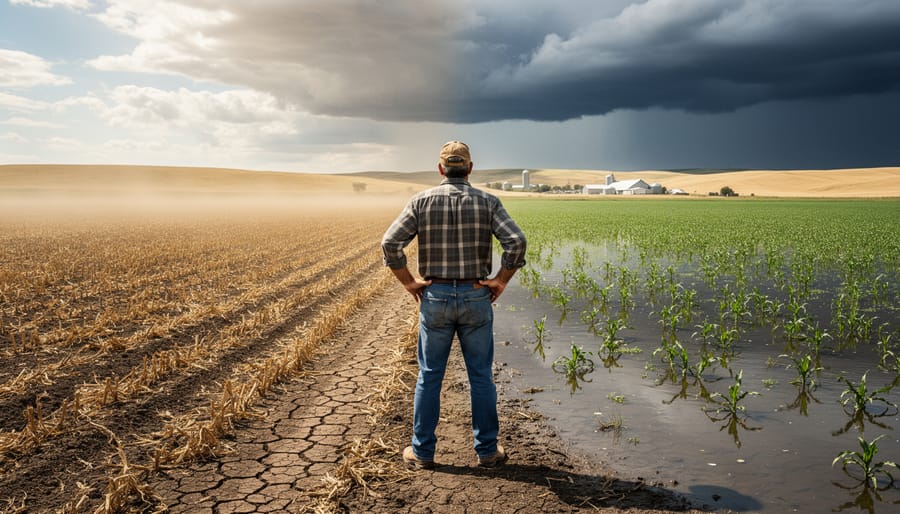
The Real Cost of Weather Uncertainty
Climate uncertainty isn’t just about unpredictable weather—it translates directly into your farm’s bottom line. Understanding these costs helps you make informed decisions about protecting your operation.
Crop losses represent the most visible impact. Alberta farmers experienced significant yield reductions during the 2021 drought, with some regions reporting wheat yields down by 30-40%. At current market prices of $350-400 per tonne, a 100-hectare operation losing even 25% of expected yield faces losses exceeding $30,000 in a single season. The recent climate trends suggest these extreme events are becoming more frequent.
Livestock producers face mounting costs too. Heat stress reduces feed conversion efficiency by 10-15%, meaning you’re spending more on feed for less weight gain. A 200-head cattle operation can see additional feed costs of $8,000-12,000 during prolonged heat waves. Water requirements also increase by 20-30% during hot periods.
Irrigation expenses fluctuate dramatically with precipitation patterns. Variable rainfall means unpredictable pumping costs, with some farmers reporting 40% increases in electricity bills during dry years—adding $5,000-8,000 in unexpected expenses.
Equipment damage from extreme weather events, including hail-damaged machinery and wind-damaged infrastructure, can run into tens of thousands of dollars. Meanwhile, insurance premiums continue rising as insurers adjust to increased claim frequency, with some producers seeing 15-25% annual increases.
These cumulative costs make climate risk management not just prudent, but essential for long-term farm viability.
Why Traditional Risk Management Isn’t Enough Anymore
For decades, Canadian farmers relied on historical weather data to make planting decisions, select crop varieties, and plan irrigation schedules. That approach worked well when weather patterns remained relatively consistent from year to year. However, those predictable patterns are disappearing across Alberta and the Prairies.
The 2021 drought that devastated cattle operations and grain yields wasn’t in anyone’s historical playbook. Neither were the unseasonable frosts in 2019 that caught many farmers off guard after an early warm spell. Traditional risk management tools like crop insurance provide essential support, but they’re designed to respond after damage occurs rather than help you adapt proactively to changing conditions.
What made your grandfather successful on the same land may no longer apply. When a farmer near Red Deer told us his usual May seeding date now arrives two weeks earlier than it did in the 1990s, it highlighted a fundamental shift. The past no longer reliably predicts the future, and planning based solely on historical averages can leave your operation vulnerable.
This isn’t about abandoning proven farming wisdom. It’s about recognizing that climate variability requires additional tools and strategies specifically designed for uncertainty. Climate risk management builds on traditional practices while adding forward-looking approaches that help your operation stay resilient when weather patterns become increasingly unpredictable.
Building Your Climate Risk Assessment Strategy
Identifying Your Farm’s Unique Vulnerabilities
Understanding your farm’s specific vulnerabilities is the foundation of effective climate risk management. Every operation faces unique challenges based on its particular characteristics, so a one-size-fits-all approach simply won’t work.
Start by examining your crop portfolio and livestock. If you’re growing primarily cereals in southern Alberta, drought and heat stress are likely your primary concerns. Mixed operations face compound risks – extreme heat affects both grain quality and livestock health. Consider how dependent you are on specific growing conditions and whether diversification could reduce your exposure.
Location matters significantly. Farms in chinook-prone areas experience different freeze-thaw cycles than those in northern regions. Review historical weather patterns for your specific area, not just regional averages. Local conservation authorities and provincial agricultural offices maintain excellent climate data for Alberta zones.
Assess your soil’s resilience. Clay soils respond differently to heavy rainfall than sandy loam. Conduct regular soil tests measuring organic matter content, as healthier soils with higher organic matter withstand both drought and excess moisture more effectively. Poor drainage areas may need tile drainage investments before climate pressures intensify.
Water security deserves careful analysis. Map your water sources – are you dependent on dugouts, wells, or irrigation districts? Calculate your water requirements during peak demand and compare this against your most reliable low-flow scenarios.
Create a simple vulnerability matrix listing each risk factor, rating your exposure from low to high, and noting your current preparedness level. This visual tool helps prioritize where to focus your risk management investments first.
Using Local Climate Data to Plan Ahead
Understanding your local climate patterns starts with accessing reliable data sources. Environment and Climate Change Canada offers free historical weather records and long-term forecasts through their website, providing farmers with essential information for planning crop rotations and managing seasonal risks. Agriculture and Agri-Food Canada’s climate atlas presents regional projections in accessible formats, showing how temperature and precipitation patterns may shift in your area.
Modern climate data tools make interpretation straightforward. Look for trends in frost dates, growing degree days, and precipitation timing rather than focusing on individual weather events. For example, many Alberta producers now track soil moisture data alongside traditional rainfall measurements to better predict drought conditions.
Start by comparing the last five years of weather records with 20-year averages for your region. Notice shifts in spring warming dates or fall freeze patterns? These insights directly inform planting schedules and variety selection. Many farm management software programs now integrate this data automatically, helping you make informed decisions about crop insurance coverage, irrigation scheduling, and harvest timing based on real conditions rather than assumptions.
Mapping Risk to Financial Impact
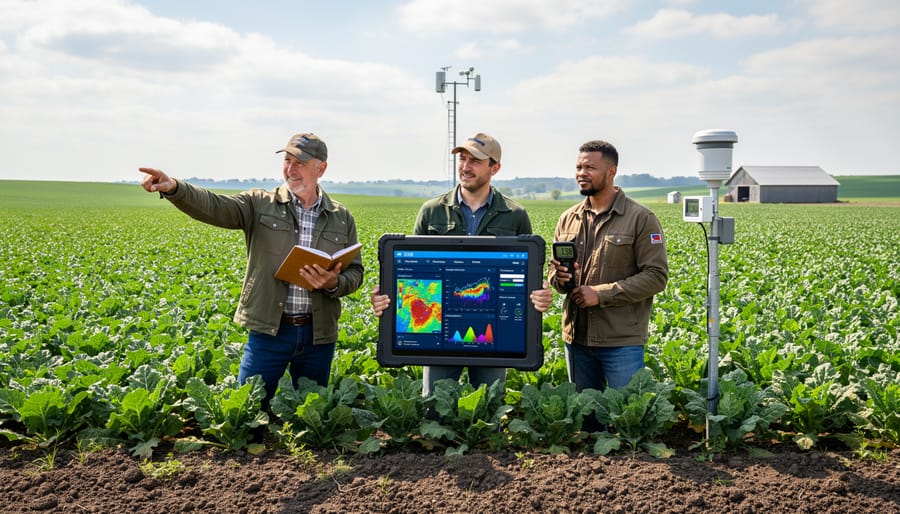
Understanding how climate events translate into dollars and cents helps you make smarter decisions about protecting your operation. Start by identifying your farm’s most vulnerable assets: crops, livestock, infrastructure, and equipment. For each climate threat you’ve assessed, estimate the potential financial hit.
A prairie grain farmer might calculate that a severe drought could reduce canola yields by 40%, translating to $80,000 in lost revenue on 400 hectares. Add in the cost of purchasing supplemental feed if pastures fail, and the total impact becomes clearer. Similarly, extreme heat events affecting livestock require calculating veterinary costs, reduced milk production, and potential animal losses.
Alberta farmer Tom Davidson shares his approach: “We mapped out three scenarios for each major risk: best case, likely case, and worst case. This helped us see where insurance made sense versus where we needed to invest in prevention like better irrigation systems.”
Create a simple risk matrix that ranks each threat by likelihood and financial severity. This visual tool shows you where to focus your limited resources first. High-probability, high-impact risks deserve immediate attention and investment, while low-probability events might only warrant basic contingency planning. This systematic approach transforms abstract climate concerns into actionable priorities that protect your bottom line.
Financial Tools That Strengthen Your Climate Defense
Insurance Options Beyond the Basics
Beyond traditional crop insurance through programs like AgriInsurance, Canadian farmers have access to expanding insurance products designed specifically for climate volatility. Understanding these options helps you build comprehensive protection tailored to your operation’s unique risks.
Crop insurance in Canada covers yield losses from weather events, but many producers don’t realize coverage levels are adjustable. “We often see farmers automatically renewing at 70 percent coverage when they could benefit from 80 or 90 percent protection, especially on high-value crops,” explains Sarah Kowalski, an agricultural insurance broker in Lethbridge. Review your coverage annually as climate patterns shift and production values change.
Livestock insurance protects against mortality from extreme weather events, including heat stress and flooding. Consider supplemental coverage during particularly vulnerable seasons. Alberta producers managing cattle through increasingly unpredictable winters have found this especially valuable.
Emerging climate-specific products now address gaps traditional policies miss. These include:
– Rainfall index insurance that pays out based on precipitation levels rather than yield loss
– Temperature-based coverage for heat or frost events
– Business interruption insurance covering income loss from climate disruptions
– Equipment breakdown insurance, increasingly relevant as extreme weather strains machinery
To evaluate coverage gaps, map your climate vulnerabilities against current policies. Ask yourself: What events could financially cripple my operation? Which aren’t adequately covered? Work with brokers familiar with agricultural operations to customize protection. While premiums represent additional costs, strategic insurance creates financial resilience that protects your long-term viability when climate events strike.
Diversification as Your Safety Net
Think of diversification as building multiple layers of protection for your farm’s financial health. When weather patterns become unpredictable, relying on a single crop or income stream leaves you vulnerable. Instead, consider implementing diversification strategies that create revenue stability.
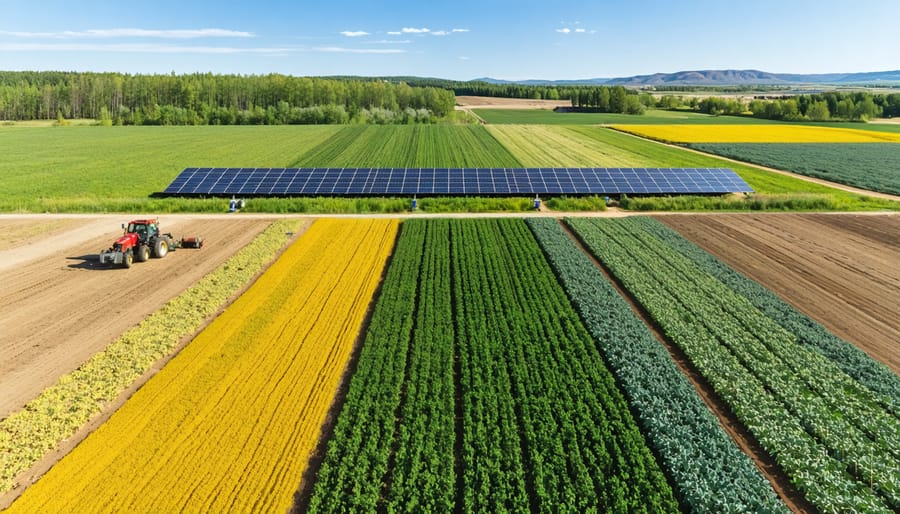
Start with crop rotation systems that balance risk across different growing seasons. If drought affects your wheat, perhaps your pulse crops will perform better. Many Alberta farmers are also exploring value-added products, transforming raw commodities into processed goods like cold-pressed canola oil or specialty flours that command premium prices.
Agritourism offers another buffer against climate-related losses. Farm tours, u-pick operations, or hosting events can generate income regardless of field conditions. Saskatchewan farmer Maria Chen discovered this firsthand when flooding damaged her grain crop in 2022. Her farm-based educational programs continued generating revenue, covering 40 percent of her operational costs during recovery.
Consider partnerships with local processors or farmers’ markets to establish multiple sales channels. This approach not only spreads climate risk but also strengthens your connection to your community and creates new opportunities for growth.
Emergency Funds and Financial Reserves
Building a financial cushion specifically for climate-related disruptions can mean the difference between weathering a storm and facing serious hardship. Aim to set aside 10-15% of your annual operating budget in a dedicated emergency fund, separate from your regular operating line of credit.
Start small if needed. Even setting aside $200-$500 monthly creates momentum and can cover immediate needs like emergency repairs or temporary irrigation during drought. Consider opening a high-interest savings account specifically for climate emergencies, making it accessible but separate from day-to-day operations.
Many Alberta producers have found success using a tiered savings approach. Keep three months of essential expenses in readily accessible savings, and build toward six to twelve months in a separate reserve account. This strategy proved invaluable for grain farmers during the 2021 drought, when those with reserves could adjust planting decisions without financial panic.
Review your reserve quarterly and adjust contributions based on seasonal cash flow. During strong years, boost your contributions by 5-10%. Remember, this isn’t just about surviving disasters—it’s about maintaining operational flexibility when climate challenges require quick adaptation, whether that’s purchasing emergency feed, drilling a new well, or pivoting crop plans mid-season.
On-Farm Practices That Reduce Climate Vulnerability
Water Management for Drought and Flood Resilience
Managing water effectively is one of your most powerful tools for building resilience against both drought and flooding. In Alberta, where precipitation patterns are becoming increasingly unpredictable, smart water management techniques can make the difference between a successful season and devastating losses.
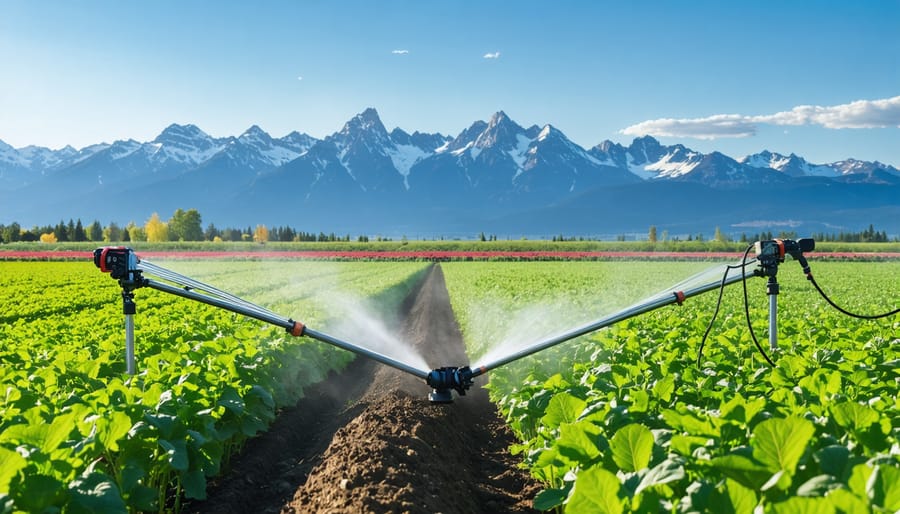
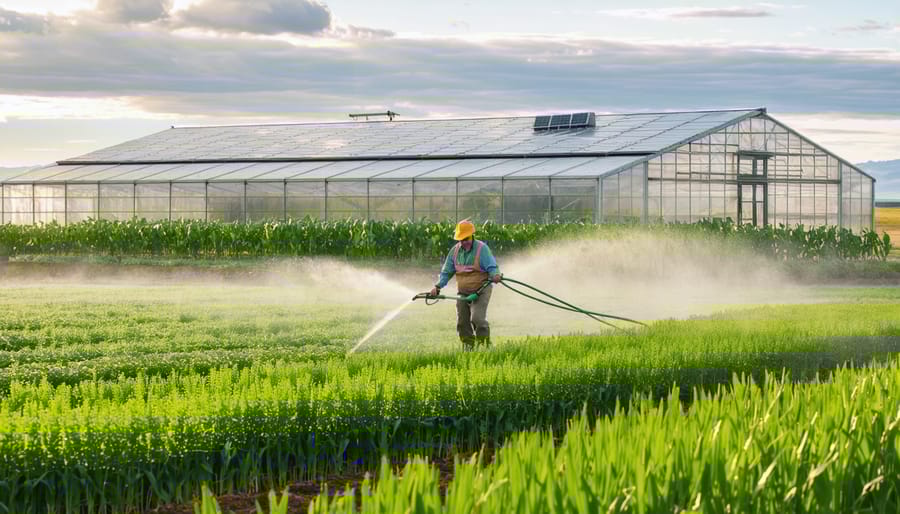
Start by improving irrigation efficiency. Drip irrigation systems can reduce water use by 30-50% compared to traditional methods while maintaining yields. Variable rate irrigation technology allows you to apply water precisely where needed, conserving this precious resource. For water storage, consider dugouts with a minimum capacity of 1,500-2,000 cubic metres to capture spring runoff and provide reserves during dry periods.
Drainage systems are equally critical. Installing tile drainage at depths of 90-120 centimetres helps remove excess water during heavy rainfall events, preventing crop damage and soil erosion. Southern Alberta producers have successfully combined drainage with retention ponds to manage water flow during extreme weather.
Moisture conservation practices like cover cropping and reduced tillage can increase soil water retention by up to 25%. Mulching with organic materials helps maintain soil moisture levels during drought while reducing evaporation losses by approximately 20-30%.
Soil Health as Climate Insurance
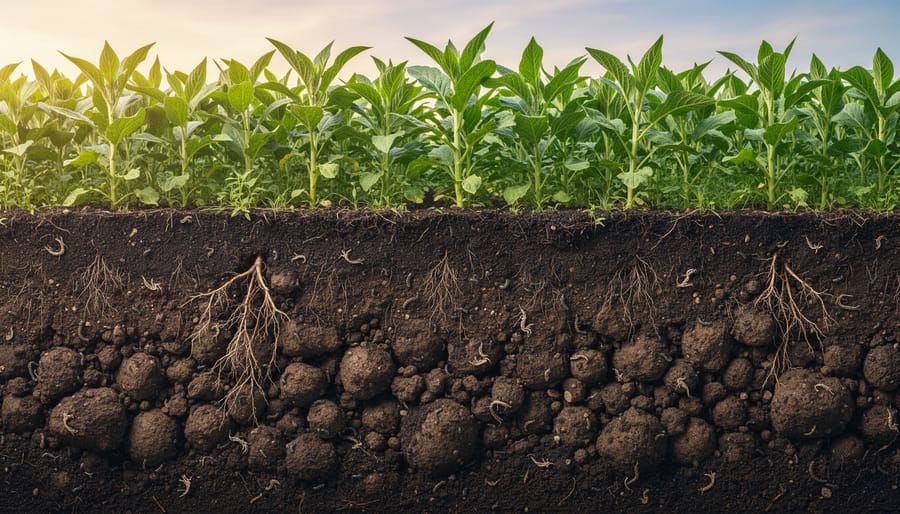
Think of healthy soil as your farm’s built-in insurance policy against unpredictable weather. When you focus on building organic matter, you’re creating a natural sponge that can hold up to 20,000 litres of water per hectare for every 1% increase in organic matter. This means your fields can absorb heavy rainfall events without flooding, while also retaining moisture during dry spells.
Reducing tillage plays a crucial role in this resilience. Alberta farmer James Chen from Lacombe reduced his tillage operations five years ago and noticed his fields now drain 30% faster after rain events, yet maintain moisture two weeks longer during drought. The intact soil structure creates pathways for both water infiltration and root development.
Building soil structure through cover crops and diverse rotations strengthens this natural buffer. The microbial networks and root channels act like underground infrastructure, moving water where it needs to go. During the 2021 drought, producers with higher organic matter levels reported yield losses 15-25% lower than conventional operations in their area.
Start small by testing one field’s organic matter levels this season and tracking how it responds to weather extremes compared to your other acres. This practical comparison will show you exactly how soil health translates into climate resilience on your operation.
Crop Selection and Timing Adjustments
Choosing the right crops and adjusting when you plant them can significantly reduce your vulnerability to climate variability. Start by exploring climate-appropriate crop varieties that tolerate drought, heat stress, or excess moisture based on your farm’s specific challenges. Many Alberta producers are successfully diversifying with pulse crops and drought-resistant cereals that perform better under unpredictable conditions.
Adjusting planting schedules helps you work with shifting frost dates and growing seasons. Monitor soil temperature rather than calendar dates, aiming for optimal germination conditions. Some farmers are experimenting with split planting dates to spread risk across different weather windows.
Season extension techniques like hoop houses, row covers, and windbreaks create microclimates that buffer against temperature extremes. These tools let you start earlier in spring or extend harvest into fall, maximizing productive days despite variable weather patterns. Your local agricultural fieldman can provide region-specific recommendations based on what’s working for neighboring operations facing similar climate conditions.
How Alberta Farmers Are Making It Work: Real Stories
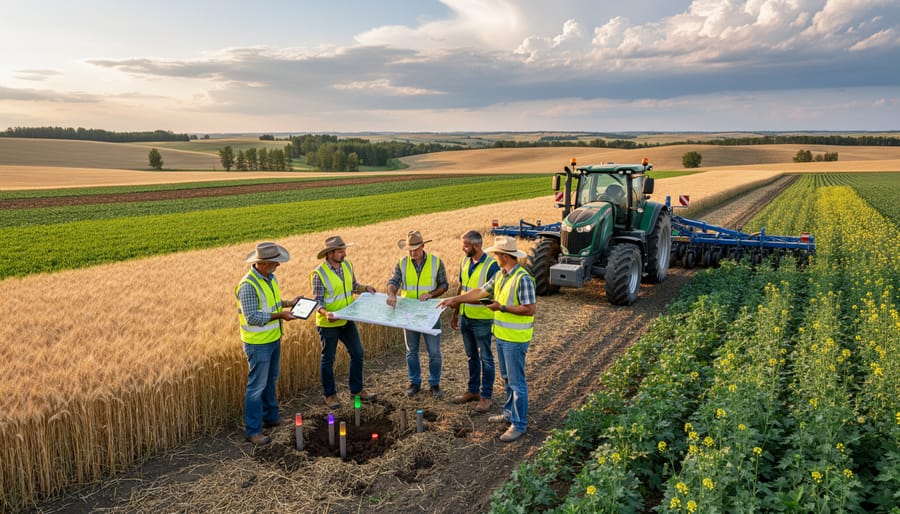
When drought hit southern Alberta in 2021, Greg Tensen from Lethbridge County was ready. While many neighbouring farms faced difficult financial decisions, Greg’s operation remained stable thanks to a comprehensive climate risk management strategy he’d implemented three years earlier.
“We started by diversifying our revenue streams and securing multi-peril crop insurance with enhanced coverage options,” Greg explains. “Then we worked with our accountant to set up an AgriStability account and opened a Tax-Free Savings Account specifically for climate emergencies.” The result? When yields dropped by 35 percent that season, Greg’s combination of insurance payouts and emergency savings covered his operating costs without taking on additional debt. His net loss was just 8 percent compared to an average 22 percent loss among uninsured farms in his region.
Sarah Chen operates a mixed grain and cattle operation near Red Deer, and she’s taken climate resilience a step further by incorporating weather derivatives into her risk management toolkit. After attending a farm financial planning workshop in 2020, Sarah began purchasing temperature-based derivatives that pay out when growing season temperatures exceed specific thresholds.
“The premiums are reasonable, about 2 percent of our annual revenue, and they’ve paid off twice already,” Sarah says. During the heat dome event of 2023, her derivative contract provided $47,000 when temperatures stayed above 30 degrees Celsius for 15 consecutive days. That payout helped cover additional irrigation costs and supplemental cattle feed. Combined with her participation in the Canadian Agricultural Partnership programs, Sarah’s operation maintained profitability despite challenging conditions.
Dr. Michael Kwon, an agricultural economist at the University of Alberta, has been tracking these success stories. “What Greg and Sarah demonstrate is the power of layered protection,” he notes. “They’re not relying on single solutions but building financial resilience through multiple strategies working together.”
Near Grande Prairie, the Morrison family has focused on forward contracts and relationship banking as their primary climate risk tools. By contracting 60 percent of their canola crop before seeding and maintaining a pre-approved operating line of credit, they’ve created flexibility to weather both price volatility and production challenges.
“Our bank understands our climate risk management plan, which made securing that credit line much easier,” says James Morrison. “When we had excess moisture delay our 2022 harvest by three weeks, we had the financial buffer to wait for better conditions rather than harvesting wet grain at a discount.”
These farmers prove that effective climate risk management isn’t just about surviving disasters—it’s about building operations that thrive regardless of what weather comes your way.
Creating Your Climate Risk Management Action Plan
Short-Term Actions You Can Take This Season
You don’t need to wait months to start protecting your operation. Begin by reviewing your current insurance coverage—both crop insurance and business interruption policies—to identify gaps in climate-related protection. Document your farm’s microclimates, drainage patterns, and historical problem areas with photos and notes; this baseline information proves invaluable for future planning and insurance claims.
Connect with your local agricultural fieldman or extension office this month to learn about available climate adaptation programs and cost-share opportunities. Many Alberta producers have found unexpected support simply by asking. Consider joining a producer group or watershed association where you can share observations and strategies with neighbours facing similar conditions.
Start small with diversification by testing one new crop variety known for drought or heat tolerance on a limited area. Track the results carefully. Finally, set aside 30 minutes to create a simple risk response plan—identify your three biggest climate threats and outline one practical response for each. This exercise alone helps many farmers feel more prepared and less anxious about unpredictable weather ahead.
Building Long-Term Resilience Over 3-5 Years
While immediate actions protect your operation today, building true resilience requires strategic investments that transform your farm’s foundation over several years. Think of these as the pillars that will support your operation through decades of climate uncertainty.
Water infrastructure represents one of the most crucial long-term investments. Many Alberta producers are exploring dugout expansions, advanced irrigation systems, and water storage solutions that can capture spring runoff for summer use. John Pedersen, who farms near Lethbridge, invested in a 15-hectare reservoir system over three years. “The upfront cost was significant, around $120,000, but we’re now producing consistent yields even in drought years,” he explains.
Soil health transformation takes patience but delivers compounding returns. Transitioning to regenerative practices like cover cropping, reduced tillage, and diverse crop rotations typically requires three to five years before you see substantial improvements in water retention and resilience. These practices essentially build your soil’s capacity to handle both floods and droughts.
Diversifying your operation beyond traditional crops creates multiple income streams that buffer climate shocks. Consider adding value-added processing, agritourism elements, or exploring crops suited to changing temperature ranges. Research alternative varieties that might thrive in Alberta’s evolving climate conditions.
Finally, invest in ongoing education and community networks. Joining climate-focused farming groups and attending workshops keeps you ahead of emerging strategies. Your knowledge becomes as valuable as any physical infrastructure when conditions shift unexpectedly.
Taking charge of your farm’s climate resilience isn’t just possible—it’s one of the most valuable investments you can make for your operation’s future. The journey toward effective climate risk management may seem daunting at first, but you’re not alone. Alberta’s agricultural community is filled with farmers who are already implementing these strategies successfully, and there’s a growing network of support ready to help you do the same.
The resources available to you are more accessible than ever before. From government programs offering financial assistance for adaptation measures to agricultural extension services providing expert guidance, the tools you need are within reach. Many Alberta producers have discovered that climate risk management doesn’t require massive upfront investments—often, it starts with small, strategic changes that compound over time.
The benefits extend far beyond simply protecting against losses. Farmers who embrace climate risk management consistently report improved soil health, better water efficiency, and enhanced long-term profitability. These practices position your operation to thrive regardless of what weather patterns emerge, while contributing to a more sustainable agricultural landscape for future generations.
Your first step can be as simple as assessing one area of climate vulnerability on your farm. Review your crop insurance options, test a new water conservation technique on a small plot, or connect with a local agronomist about soil management strategies. Each action builds momentum and confidence.
The path to resilience starts today, and every measure you take strengthens not just your own operation, but Alberta’s entire agricultural community. Together, we’re building a more sustainable, climate-ready future for farming across the Prairies.