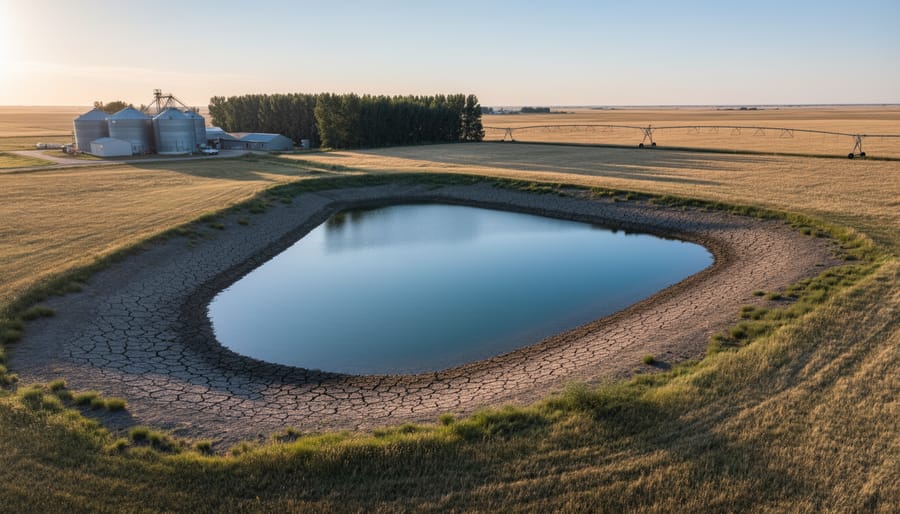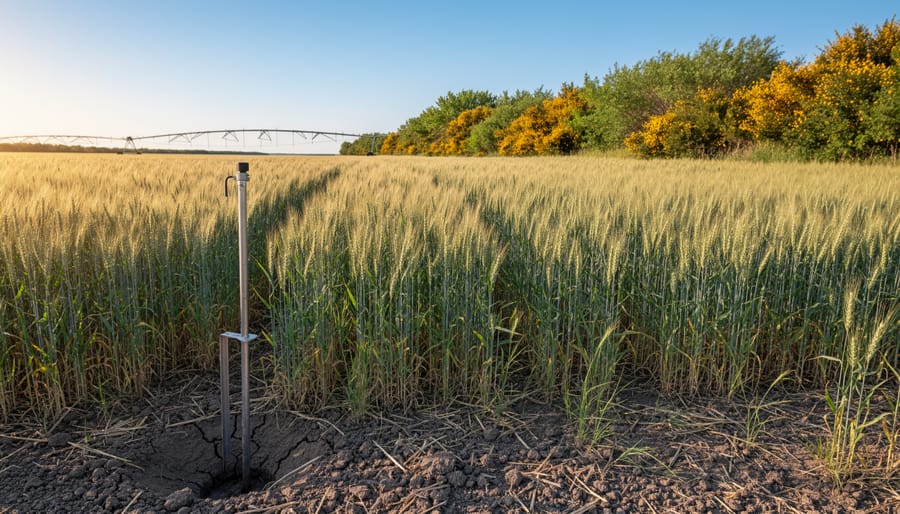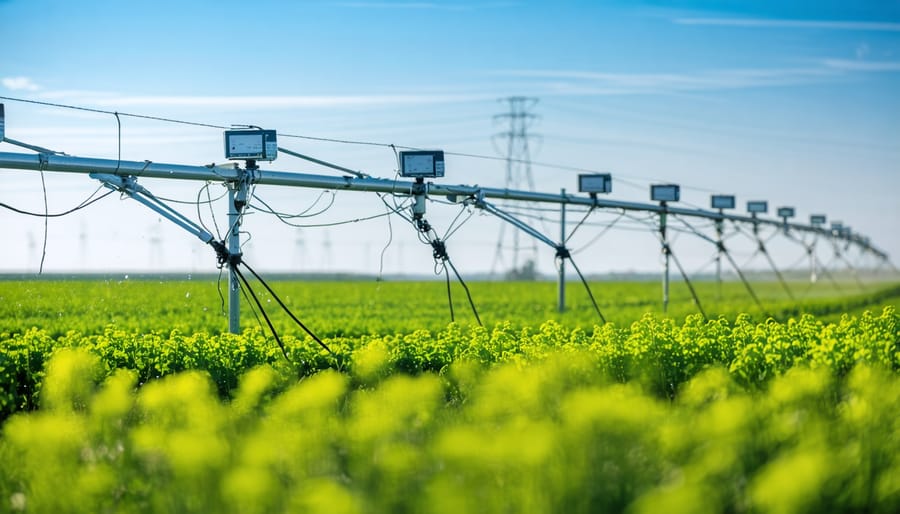
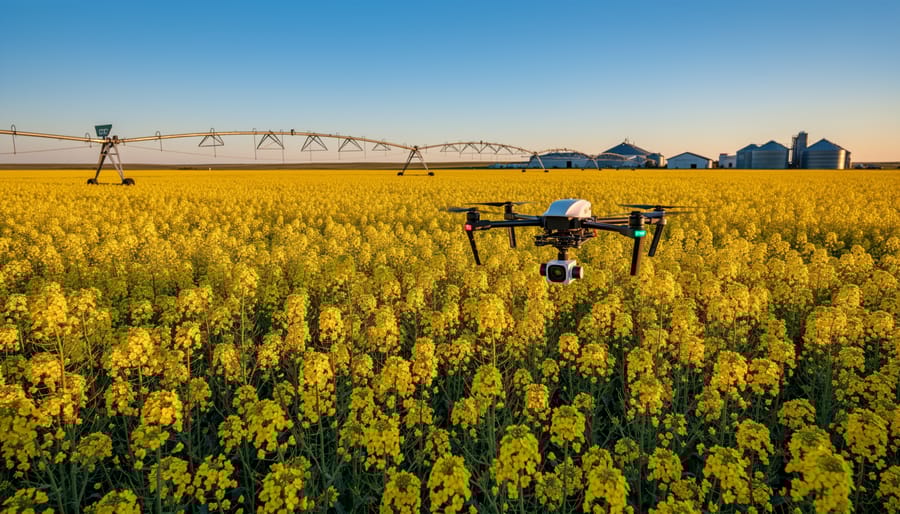
Picture a drone hovering 15 metres above your canola field, precisely mapping soil moisture levels across 40 hectares in under an hour. This is drone irrigation technology—a game-changing approach that’s helping Alberta farmers reduce water waste by up to 30% while improving crop yields. Unlike traditional irrigation management that relies on walking fields or fixed monitoring stations, drones equipped with thermal and multispectral cameras identify exactly where your crops need water, when they need it, and how much.
For organic farmers facing Alberta’s increasingly unpredictable precipitation patterns, this technology addresses a critical challenge: optimizing water use without synthetic inputs to buffer moisture stress. The system works by creating detailed moisture maps that integrate with your existing pivot or drip irrigation setup, allowing you to target dry zones rather than watering entire fields uniformly.
The investment ranges from $2,500 for basic imaging services to $25,000 for a complete in-house system, but Saskatchewan wheat producer James Thornton recovered his costs in two seasons through reduced water consumption and a 12% yield increase. His operation near Medicine Hat now monitors 240 hectares weekly during critical growing periods.
This technology isn’t reserved for large-scale operations. Farmers with as few as 30 hectares are seeing measurable returns, particularly those managing high-value organic vegetables or specialty crops where precise moisture control directly impacts certification standards and market quality.
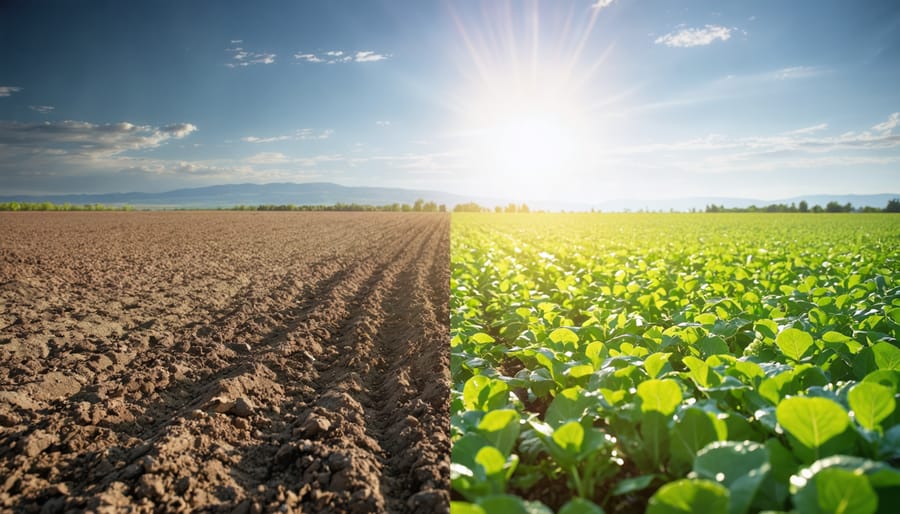
The Water Crisis in Alberta Organic Farming
Why Traditional Irrigation Falls Short for Organic Farms
For organic farmers across Alberta, conventional irrigation monitoring creates a frustrating gap between what you need to know and what traditional methods can tell you. Walk-through inspections and fixed monitoring stations might work for conventional operations that can apply synthetic fertilizers to correct nutrient imbalances or chemical treatments for disease outbreaks, but organic certification changes everything.
The challenge starts with soil health. Organic farming depends on building and maintaining complex soil biology, where beneficial microorganisms, earthworms, and organic matter work together. Standard irrigation scheduling focuses on moisture levels alone, missing the critical balance between adequate hydration and oversaturation that destroys soil structure and suffocates beneficial organisms. When you can’t reach for synthetic quick-fixes, preventing these problems becomes non-negotiable.
Water quality monitoring presents another limitation. Conventional systems typically measure basic moisture content, but organic operations need to understand how irrigation affects nutrient cycling, runoff patterns, and microbial activity across entire fields. A dry spot in one corner might indicate compaction issues requiring cover cropping solutions, while excessive moisture elsewhere could signal drainage problems that take seasons to correct organically.
Manual monitoring also struggles with Alberta’s variable weather patterns. By the time you’ve walked your fields and identified a problem area, you’ve often missed the narrow window for organic intervention. Without synthetic pesticides or fertilizers as backup options, this delayed response can mean the difference between a thriving crop and significant losses. You need real-time, comprehensive data that matches the complexity of organic growing systems.
What Drone Irrigation Actually Means
The Technology Behind the Flight
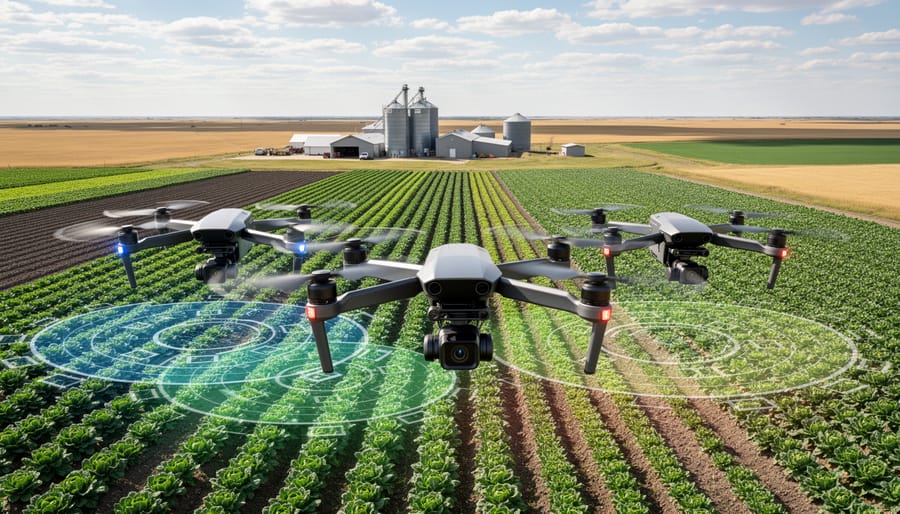
Think of drone irrigation technology as having three sets of eyes, each seeing something different about your crops. When a drone flies over your fields, it’s equipped with specialized cameras that capture information invisible to the human eye.
The most common setup includes an RGB camera, which works like your smartphone camera, capturing regular color photos of your fields. This helps you spot obvious problems like pest damage or equipment issues you might miss during ground inspections. Many Alberta farmers start with just this basic setup before investing in more advanced sensors.
Multispectral cameras take things further by measuring how plants reflect different wavelengths of light. Healthy crops reflect light differently than stressed ones, even before you can see any visible problems. This means you can identify areas needing water days or even weeks before plants start wilting. For organic farmers, this early detection is particularly valuable since you have fewer quick-fix options available compared to conventional operations.
Thermal cameras measure temperature variations across your fields. Since plants cool themselves through transpiration (similar to how we sweat), areas with inadequate moisture show up as warmer spots. During Alberta’s hot, dry summers, this information helps you target irrigation precisely where it’s needed.
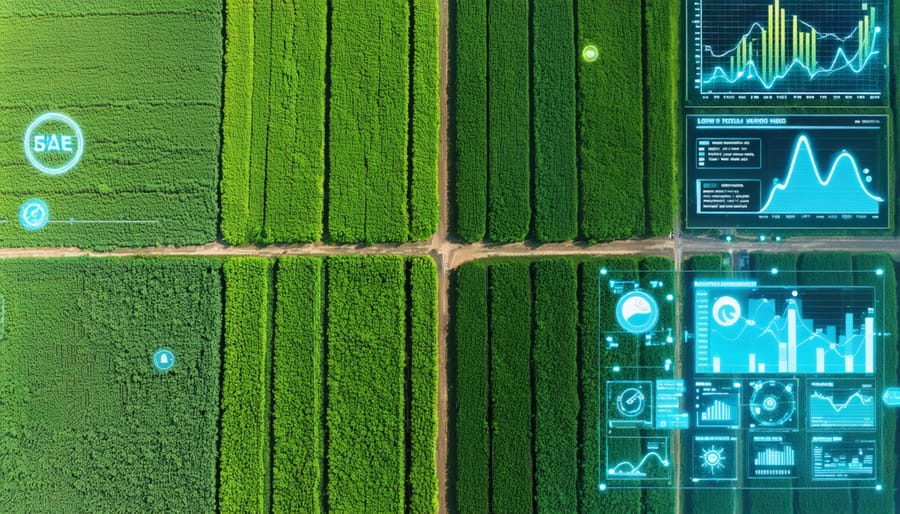
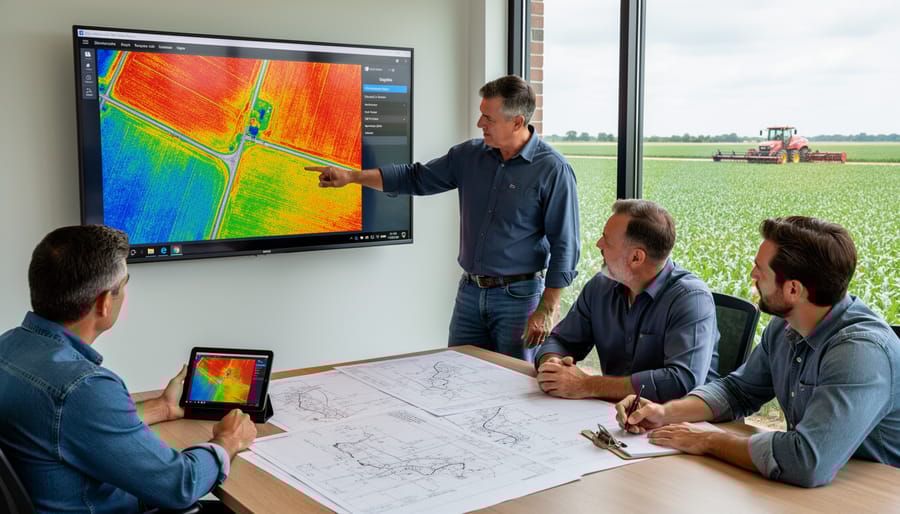
After each flight, the drone’s software processes thousands of images into easy-to-read maps on your computer or tablet. You’ll see your fields color-coded by health zones, with specific coordinates showing exactly where problems exist. The software typically generates moisture stress maps, vegetation health indices, and growth comparisons over time. Most systems also provide irrigation recommendations measured in millimeters of water needed per zone, making it straightforward to adjust your system accordingly.
From Data to Decisions: Reading What Your Drone Tells You
Once your drone completes its flight, the real work begins: turning images into irrigation decisions. Modern drone software processes multispectral imagery to create detailed moisture maps that show exactly where your fields are too dry, adequately watered, or oversaturated. These maps use color gradients—typically ranging from red (dry) to blue (wet)—making it easy to spot problem areas at a glance.
The technology identifies plant stress indicators before visible symptoms appear to the naked eye. Healthy crops reflect light differently than stressed ones, and drones capture these subtle differences through specialized cameras. When plants start experiencing water stress, their infrared signature changes, often 7-10 days before you’d notice wilting or discoloration. This early warning system lets you adjust irrigation schedules proactively rather than reactively.
Field variability zones are another crucial output. Your drone data reveals that not all areas of your field have identical water needs. Sandy patches may require more frequent irrigation than clay-heavy sections. Slopes drain differently than flat areas. By mapping these zones, you can program your precision irrigation system to deliver the right amount of water to each zone.
Most drone software platforms generate prescription maps compatible with variable rate irrigation controllers, eliminating guesswork and reducing water waste by 15-30 percent. The key is reviewing your drone data consistently—weekly during peak growing season—and cross-referencing it with ground-truthing observations to verify accuracy and build confidence in your interpretation skills.
Real Benefits for Organic Operations
Water Savings You Can Measure
The numbers tell a compelling story. Canadian organic farmers using drone-based irrigation monitoring are reporting water reductions between 15% and 35%, with the higher savings typically occurring during Alberta’s drier growing seasons. These aren’t theoretical projections—they’re measured results from actual field operations.
Take the data from a 200-acre organic grain operation near Lethbridge. After implementing drone irrigation monitoring in 2023, the farm documented a 28% reduction in water usage while maintaining crop yields. That translated to savings of approximately $4,200 in irrigation costs for the season, plus reduced pumping expenses.
The efficiency improvements come from precise identification of over-watered zones and early detection of irrigation system malfunctions. Farmers are catching clogged emitters and misaligned pivots within 24 hours instead of days or weeks. One Taber-area vegetable grower reported finding and fixing irrigation issues 60% faster than with traditional field walks.
Cost savings vary by operation size and water source, but most farms see returns between $18 and $45 per acre annually when factoring in reduced water bills, lower energy costs for pumping, and decreased labour time. These metrics make the technology particularly attractive for organic operations where input efficiency directly impacts profitability.
Protecting Soil Health While You Irrigate
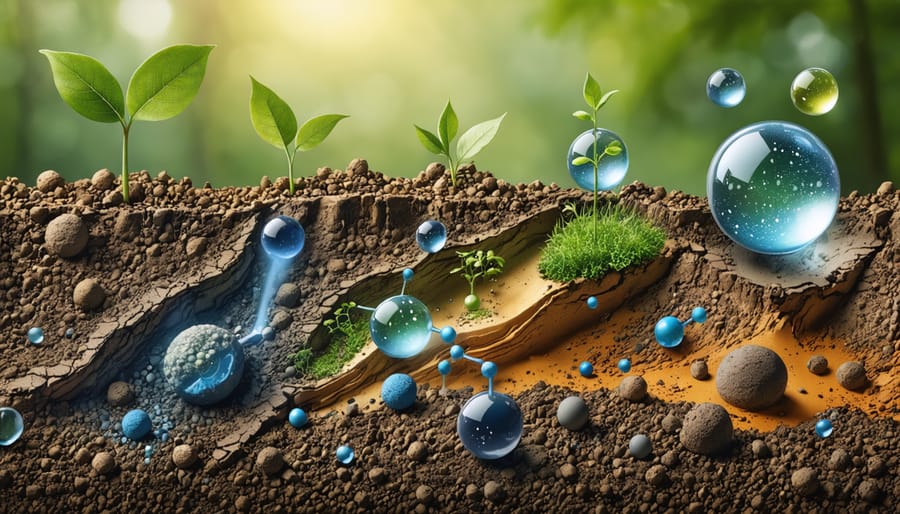
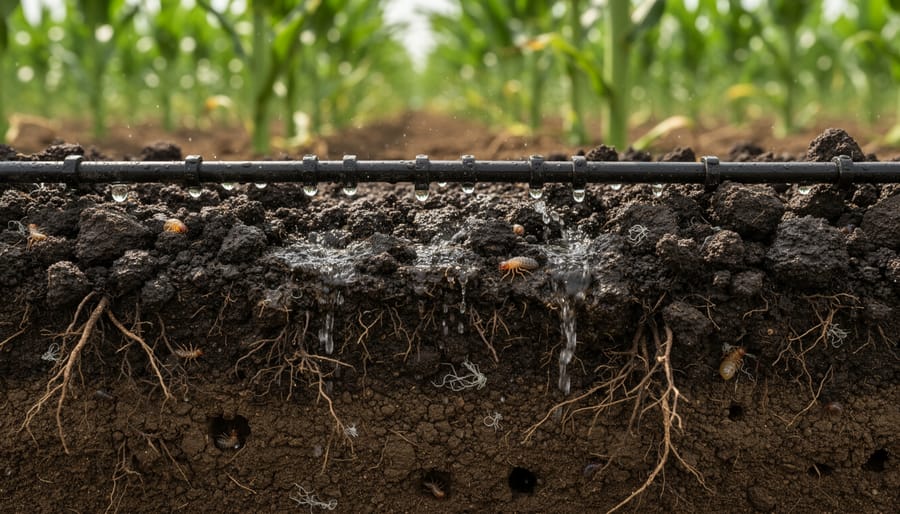
Overwatering doesn’t just waste resources—it fundamentally damages your soil’s structure and biological health. When soil becomes waterlogged, the spaces between particles fill with water instead of air, creating anaerobic conditions that kill beneficial aerobic microbes essential for nutrient cycling. These microorganisms are particularly crucial for organic operations where synthetic inputs aren’t an option.
Drone irrigation technology addresses this challenge through precision application that maintains optimal soil moisture levels without saturation. The multispectral sensors detect subtle variations in crop water stress across your fields, allowing you to deliver exactly what each zone needs. This targeted approach prevents the compaction and crusting that occurs when excess water breaks down soil aggregates.
Beyond structural protection, precise irrigation safeguards your nutrient investments. When you apply too much water, valuable nutrients like nitrogen and potassium leach below the root zone, essentially washing away your organic amendments and fertilizers. This leaching poses particular problems for organic certification, as maintaining soil fertility without synthetic inputs requires careful nutrient management.
Alberta organic farmer David Chen reports improved soil test results after two seasons using drone-guided irrigation. “Our microbial biomass increased by 40 percent, and we’re seeing better water infiltration rates,” he notes. The technology helped him reduce water applications by 30 percent while actually improving soil conditions—a critical factor when protecting soil health during Alberta’s variable growing seasons.
For operations focused on building long-term soil fertility, precision irrigation becomes an essential tool rather than optional technology.
Catching Problems Before They Cost You
Think of drone irrigation monitoring as your early warning system. Thermal imaging cameras mounted on agricultural drones can detect temperature variations as small as 0.5°C across your fields, revealing stressed crops days or even weeks before you’d notice yellowing leaves from the ground. This technology is particularly valuable for Alberta growers dealing with variable moisture conditions.
When a sprinkler head clogs or an irrigation line develops a leak, drones spot these failures immediately through irregular moisture patterns and temperature anomalies. Instead of discovering the problem after an entire section has suffered, you can dispatch your team to fix it the same day. Similarly, drainage issues that lead to waterlogged areas show up clearly in drone imagery, allowing you to address compaction or grading problems before root diseases take hold.
A Red Deer area grain farmer recently shared how drone monitoring caught a faulty pivot section that was under-watering 12 hectares. The imagery revealed the problem within two days, saving an estimated 15-20% yield loss in that zone. The repair cost $400, but catching it early prevented roughly $8,000 in lost production. This shift from reactive damage control to proactive management means your irrigation investment actually protects your bottom line rather than just maintaining it.
Alberta Farmers Already Making It Work
When Mark and Jennifer Patterson decided to integrate drone technology into their 240-hectare organic operation near Lethbridge, they weren’t completely sure what to expect. Three years later, they’re wondering why they didn’t start sooner.
The Pattersons grow certified organic wheat, canola, and pulses on land that’s been in their family since 1947. Like many Alberta farmers, they’d been struggling with uneven irrigation coverage across their fields, particularly in their pivot-irrigated sections where wind drift and equipment limitations created persistent dry spots.
“We were seeing yield differences of 30 to 40 percent between well-watered areas and those missing spots,” Mark explains. “With organic certification, we can’t just throw synthetic fertilizers at the problem to compensate. We needed to get our water management right.”
In spring 2022, the Pattersons partnered with a precision agriculture consultant who flew their fields every 10 days throughout the growing season using a multispectral camera drone. The initial investment included $3,500 for the season’s imaging service and another $2,000 for soil moisture sensors placed strategically based on the first drone maps.
The learning curve was steeper than anticipated. “Understanding how to read the NDVI maps took some practice,” Jennifer admits. “We spent quite a bit of time that first month on the phone with our consultant, matching what we were seeing in the fields with what the data was showing.”
By mid-season, patterns emerged that changed their entire irrigation strategy. The drone imagery revealed that their northwestern quarter was receiving 15 percent less water than management zones in the southeast, primarily due to prevailing wind patterns they hadn’t fully accounted for.
After one complete growing season, the results spoke clearly. The Pattersons reduced their water usage by 18 percent while increasing overall yield by 12 percent. Their organic wheat averaged 3.2 tonnes per hectare, up from 2.7 the previous year. Equipment adjustments based on drone data cost an additional $1,800, but the improved yields generated an extra $28,000 in revenue.
“The technology paid for itself in year one,” Mark says. “Now we’re using it to fine-tune our approach even further.”
Getting Started: What You Actually Need
The Investment: Equipment and Services
Understanding the financial commitment is essential before integrating drone technology into your irrigation management. Canadian farmers have two main options: purchasing their own system or contracting professional services.
For those considering ownership, entry-level agriculture drones suitable for basic irrigation monitoring start around $2,500 to $5,000 CAD. These typically include RGB cameras and basic flight capabilities. Mid-range systems with multispectral imaging sensors range from $15,000 to $30,000 CAD and provide the thermal and NDVI imaging needed for comprehensive irrigation assessment. Professional-grade systems can exceed $50,000 CAD but offer advanced features like real-time data processing and integration with precision irrigation controllers.
When purchasing, factor in additional costs: batteries ($200-500 each), insurance ($1,000-2,500 annually), transport cases ($300-800), and specialized software subscriptions ($500-2,000 yearly). Training courses typically cost $500 to $1,500 per person.
Alternatively, contracting drone services offers flexibility without upfront capital investment. Alberta-based agricultural drone operators typically charge $5 to $15 per acre for basic monitoring flights, with volume discounts for larger properties. Comprehensive packages including data analysis and irrigation recommendations range from $20 to $40 per acre per growing season.
Many farmers start with contracted services to evaluate effectiveness before committing to equipment purchases. This approach allows you to understand the technology’s value for your specific operation while building relationships with experienced operators who can provide insights tailored to your region’s conditions.
Training and Certification Requirements in Canada
Before you can legally operate a drone for irrigation monitoring on your farm, you’ll need to meet Transport Canada’s requirements. For agricultural drones under 25 kilograms, you’ll need a Basic or Advanced pilot certificate, depending on where and how you fly. Most farm operations fall under Basic certification, which requires passing an online exam covering aviation regulations, airspace, and weather considerations.
Several Alberta-based institutions offer specialized agricultural drone training programs. Olds College and Lakeland College provide hands-on courses tailored specifically for farming applications, combining the regulatory knowledge needed for certification with practical skills in flight operations and data interpretation. These programs typically run 2-3 days and cost between $500-$1,200.
From start to finish, expect to invest 10-15 hours studying Transport Canada’s materials and completing the online exam for Basic certification. Adding a specialized agricultural training course brings the total time commitment to roughly one week, though you can spread this learning over several weeks to fit your schedule.
The good news? Once certified, your credentials remain valid, and the investment in training pays dividends through confident, safe operations. Many Alberta farmers report that understanding airspace rules and flight planning actually makes their irrigation monitoring more efficient and systematic from day one.
Integrating Drones with Your Current Irrigation System
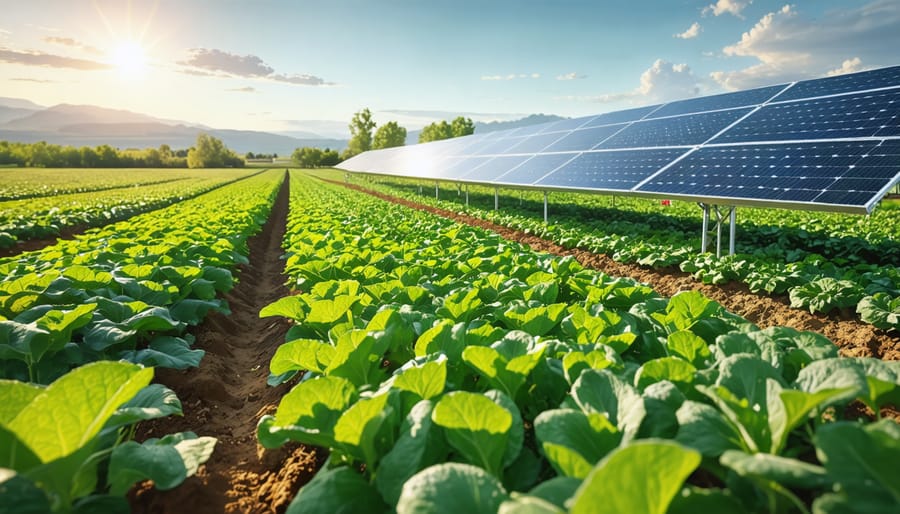
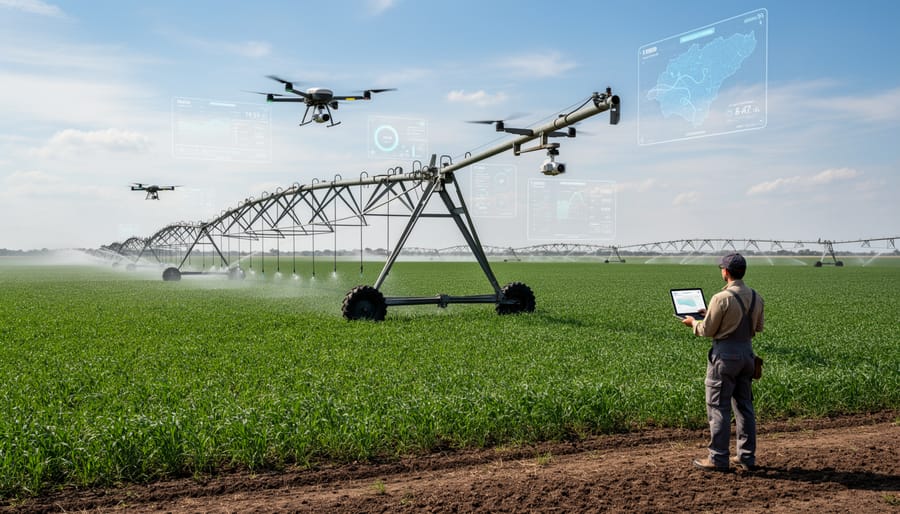
The good news is that drones don’t replace your existing irrigation infrastructure—they enhance it. Think of drone technology as the intelligence layer that helps you make better decisions about when and where to irrigate, regardless of your current setup.
For center pivot systems common across Alberta grain operations, drone imagery identifies which sections of your field need adjustment. You can modify pivot speed or install variable rate irrigation nozzles to address dry zones the drone detects, rather than applying uniform water across the entire circle.
Drip irrigation users gain particular advantages from drone integration. Since drip systems already deliver targeted watering, drone data helps you optimize scheduling and quickly identify blocked emitters or system failures before crop stress becomes visible. This is especially valuable for high-value organic vegetable operations where every plant matters.
Even with basic flood or sprinkler systems, drone insights guide timing and duration. The thermal and multispectral data indicates soil moisture levels and plant water stress, allowing you to irrigate specific fields or zones based on actual need rather than calendar schedules.
Most drone service providers deliver data through user-friendly platforms accessible on your phone or computer. These systems generate prescription maps that translate directly into irrigation decisions. Some advanced setups integrate with automated irrigation controllers, though manual adjustments work perfectly fine for most operations.
The key is starting simple. Use drone data to verify your current irrigation strategy first, then make incremental adjustments. Many Alberta farmers begin with one or two scout flights during critical growth stages, learning how the technology complements their system before expanding usage. This measured approach keeps costs manageable while building your confidence with the technology.
Expert Perspective: What the Data Shows
We spoke with Dr. Sarah Chen, an agricultural technology consultant who has worked with over 40 Canadian organic farms implementing precision irrigation systems. Based in Red Deer, Alberta, Dr. Chen specializes in helping medium-sized operations transition to data-driven water management.
“The most successful drone irrigation projects I’ve seen share one common factor: farmers started small,” Dr. Chen explains. “They didn’t try to map their entire 200-hectare operation in week one. Instead, they focused on a problem field—maybe one with drainage issues or inconsistent yields—and used that as their testing ground.”
According to Dr. Chen, the data collected from these initial trials consistently shows water savings between 15 and 25 percent in the first growing season alone. “What surprises most farmers is how much water they were applying to areas that didn’t need it. The thermal imaging reveals patterns you simply can’t see from ground level.”
The biggest mistake? Treating drone irrigation as a one-time solution rather than an ongoing management tool. “Farmers who fly once or twice a season see minimal benefit,” she notes. “The real value comes from regular monitoring—ideally weekly during peak growing season. That’s when you catch problems early, whether it’s irrigation system malfunctions, soil compaction, or early signs of disease stress.”
Looking ahead, Dr. Chen sees integration as the next frontier. “We’re moving toward systems where your drone data talks directly to your irrigation controllers. Within three to five years, I expect most mid-sized organic operations in Alberta will have some form of automated response system. The drone identifies the dry spot, and the system adjusts water delivery automatically.”
For farmers considering this investment, her advice is straightforward: “Start with a clear goal. Are you trying to reduce water costs, improve yield uniformity, or meet organic certification requirements? Your answer determines which sensors and services you need. Don’t buy capabilities you won’t use.”
Drone irrigation technology offers Alberta organic farmers a practical pathway to improve water efficiency, reduce labor costs, and enhance crop health while supporting environmental stewardship. The evidence from Canadian operations demonstrates real results, from 15-30% water savings to improved yields and reduced pest pressure. For many farmers, this technology represents not just a competitive advantage but a necessary adaptation to our changing climate and increasingly scarce water resources.
Starting small makes sense for most operations. Consider beginning with a single high-value field or crop type to test the technology and build confidence before scaling up. Many farmers find that leasing equipment or partnering with service providers reduces initial financial risk while allowing them to evaluate benefits firsthand. The investment threshold continues to drop as technology becomes more accessible, making this one of several irrigation solutions worth exploring for your operation.
Remember, precision irrigation supports both your bottom line and your commitment to organic principles. It conserves water, protects soil health, and reduces chemical runoff, all while improving productivity.
Ready to learn more? Contact your local agricultural extension office or the Organic Alberta network to connect with farmers already using drone irrigation systems. They can provide region-specific insights and help you determine if this technology fits your operation’s needs and goals. The future of sustainable farming is here, and it’s more accessible than you might think.